
Why Italian Leather Is the Best Choice for Dog Accessories
Not all leather is the same. The difference shows over time — in how a collar holds its shape after months of daily wear, in whether a leash handle softens or stiffens, in whether hardware stays seated or begins to pull away. Italian leather has a specific reputation in this category, and not by accident.
What makes Italian leather different
Italy's leather industry is one of the oldest and most technically developed in the world. The country's tanning districts — concentrated in Tuscany, Veneto, and Marche — have been refining their processes for centuries. What distinguishes them is not simply tradition, but the accumulated knowledge of material behavior: how hides respond to different tanning agents, how grain structure affects durability, and how finishing treatments interact with the leather beneath them.
Italian tanneries tend to favor vegetable tanning over the more common chrome tanning used in mass production. Vegetable tanning is slower and more labor-intensive, using natural tannins derived from tree bark rather than chemical salts. The result is a denser, more breathable leather that develops character over time rather than degrading. It is also safer — particularly relevant for dog accessories, where the material is in direct contact with an animal's skin and coat for hours every day.
The other distinguishing factor is sourcing selectivity. Italian tanneries work predominantly with European hides, which are subject to stricter animal welfare and processing standards than hides sourced from other regions. The quality of the raw material is not coincidental to the final product — it is foundational.
The leather types that matter for dog accessories
Nappa leather
Nappa is the leather most associated with premium Italian accessories, and for good reason. The term refers to full-grain or top-grain leather that has been tanned to produce an exceptionally soft, smooth surface — the name comes from Napa, California, where a particular tanning method was developed in the late 19th century, but Italian Nappa has long since become a mainstay in high-end goods.
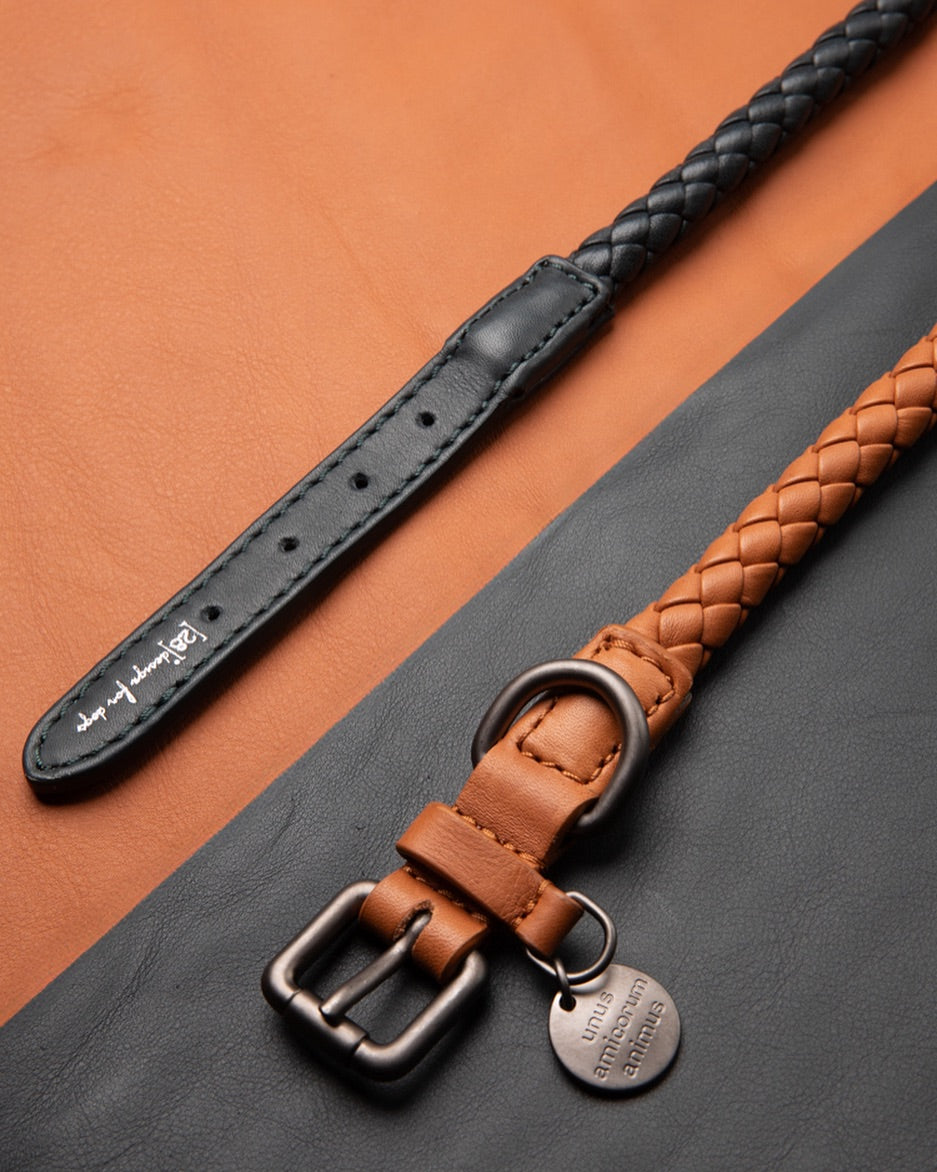
For dog collars and leashes, Nappa's key properties are its softness against the coat, its flexibility under tension, and its ability to hold dye cleanly and consistently. A Nappa collar sits flat against the neck without chafing. Braided Nappa — where strips of leather are woven together — adds structural integrity while maintaining that soft contact surface, which matters especially for all-day wear.
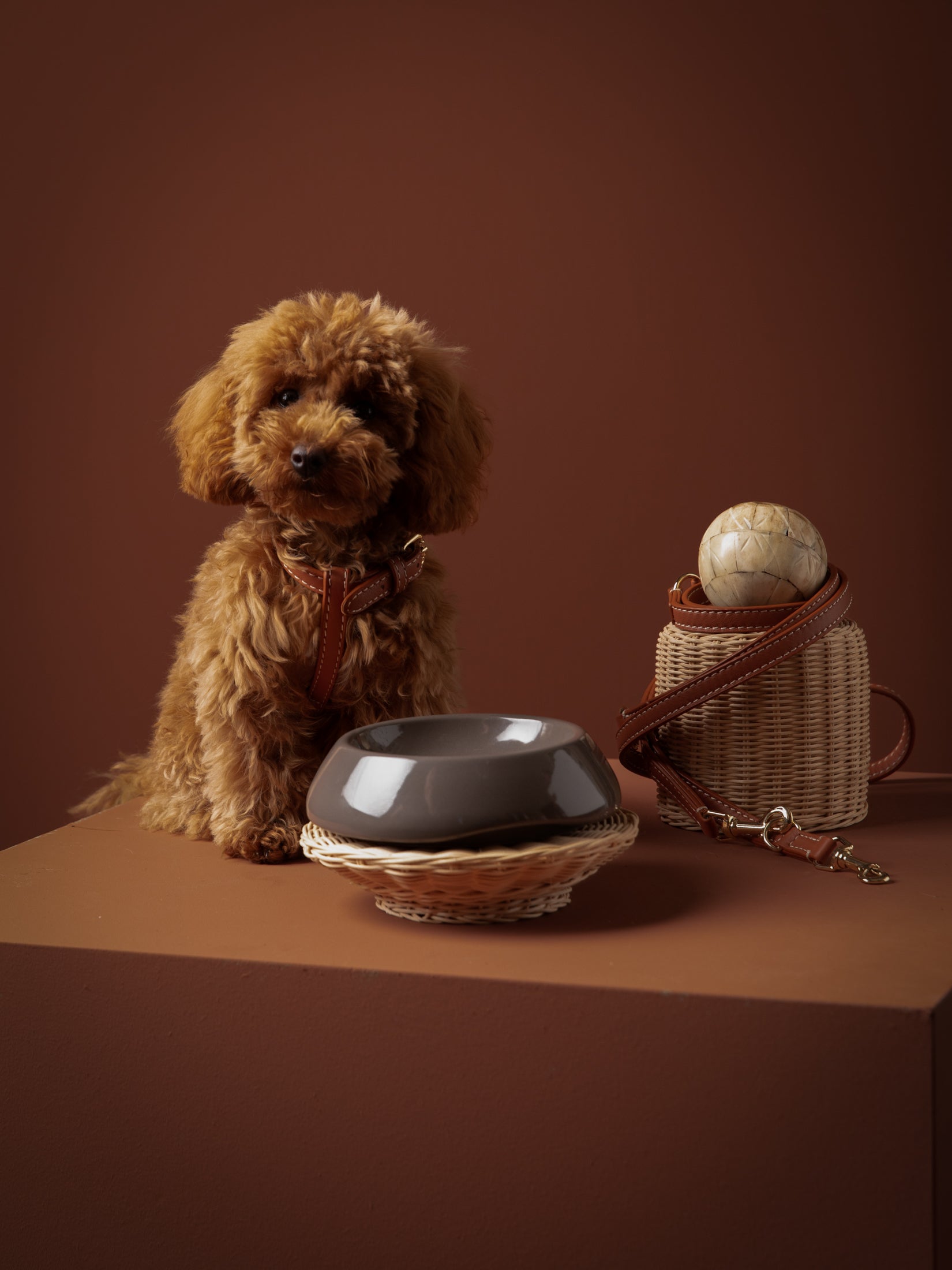
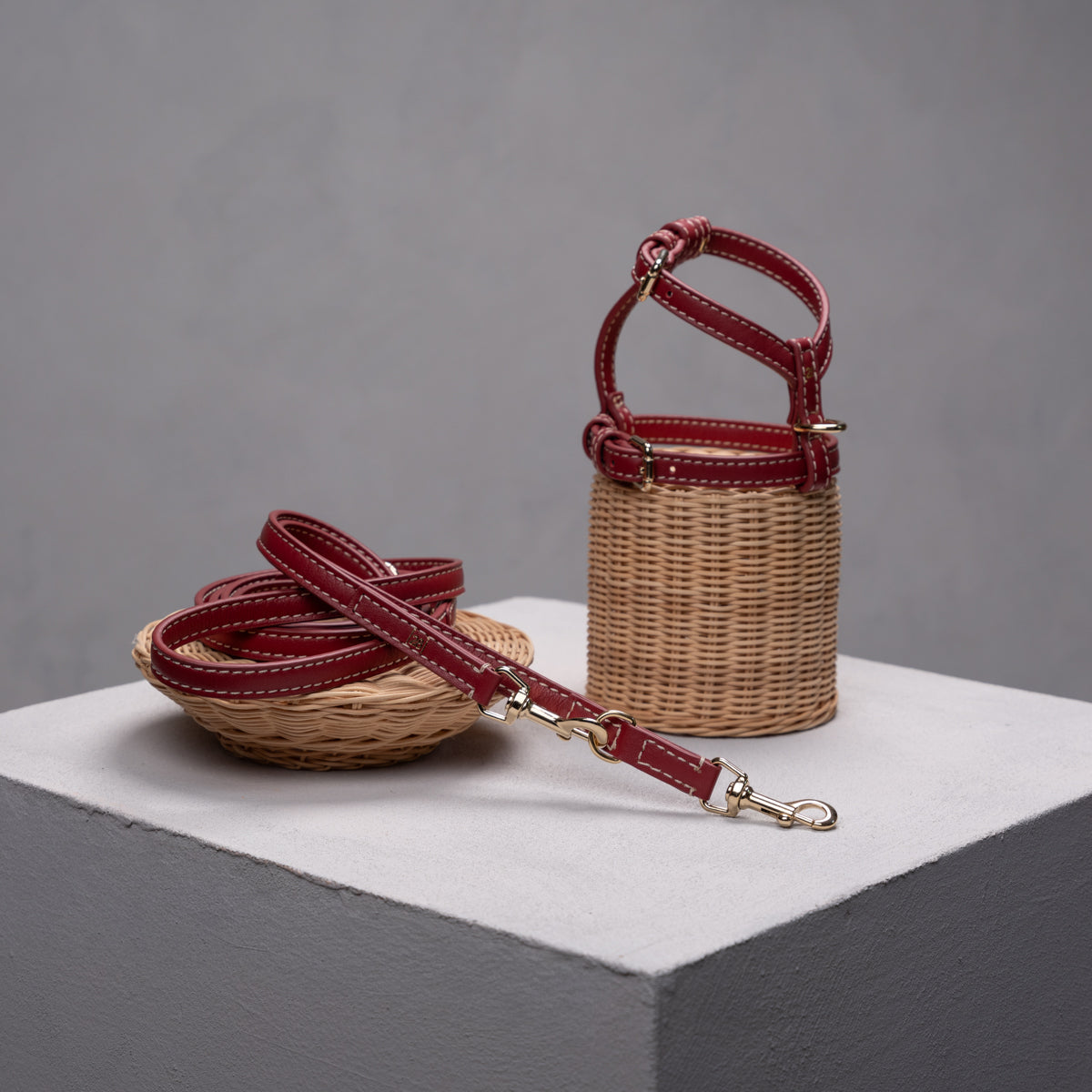
At 2.8, the Nappa leather used across the Ferdinando collar and leash collection, the Gabriele harness, and the Mario leash is sourced from an Italian supplier with over 60 years of experience. It is then worked by artisans in the Veneto region, an area of Italy with a long history in precise leather craftwork.
Cowhide leather
Vacchetta is a specifically Italian tradition. The term describes full-grain cowhide that has been vegetable-tanned using only soluble dyes, then enriched with animal fats — a process that has been refined in Tuscany over generations. The result is a dense, naturally water-resistant leather with a clean, unmarked surface that develops a distinctive patina with use.
Unlike corrected-grain leathers, which are sanded and coated to hide imperfections, vacchetta retains the full grain of the hide. Each piece is genuinely unique. The David placemat is made from vacchetta, which is why no two pieces look identical — and why the material handles repeated exposure to water, food, and daily contact better than most alternatives.
Cowhide
Full-grain cowhide is the most structurally robust leather available. Unlike split or bonded leather, full-grain retains the entire outer layer of the hide, which contains the tightest, most durable fiber structure. It is naturally water-repellent and develops a patina rather than wearing down.
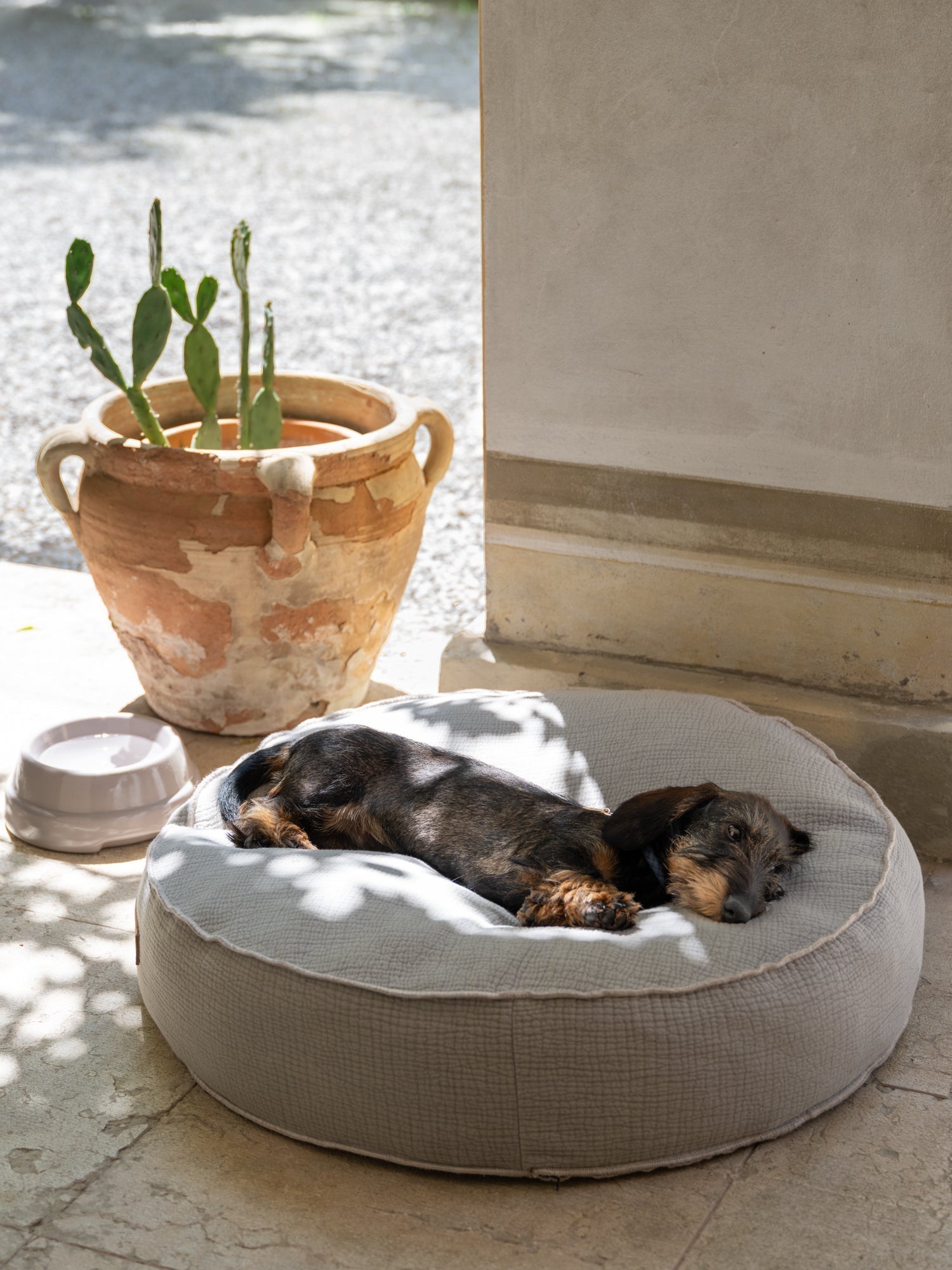
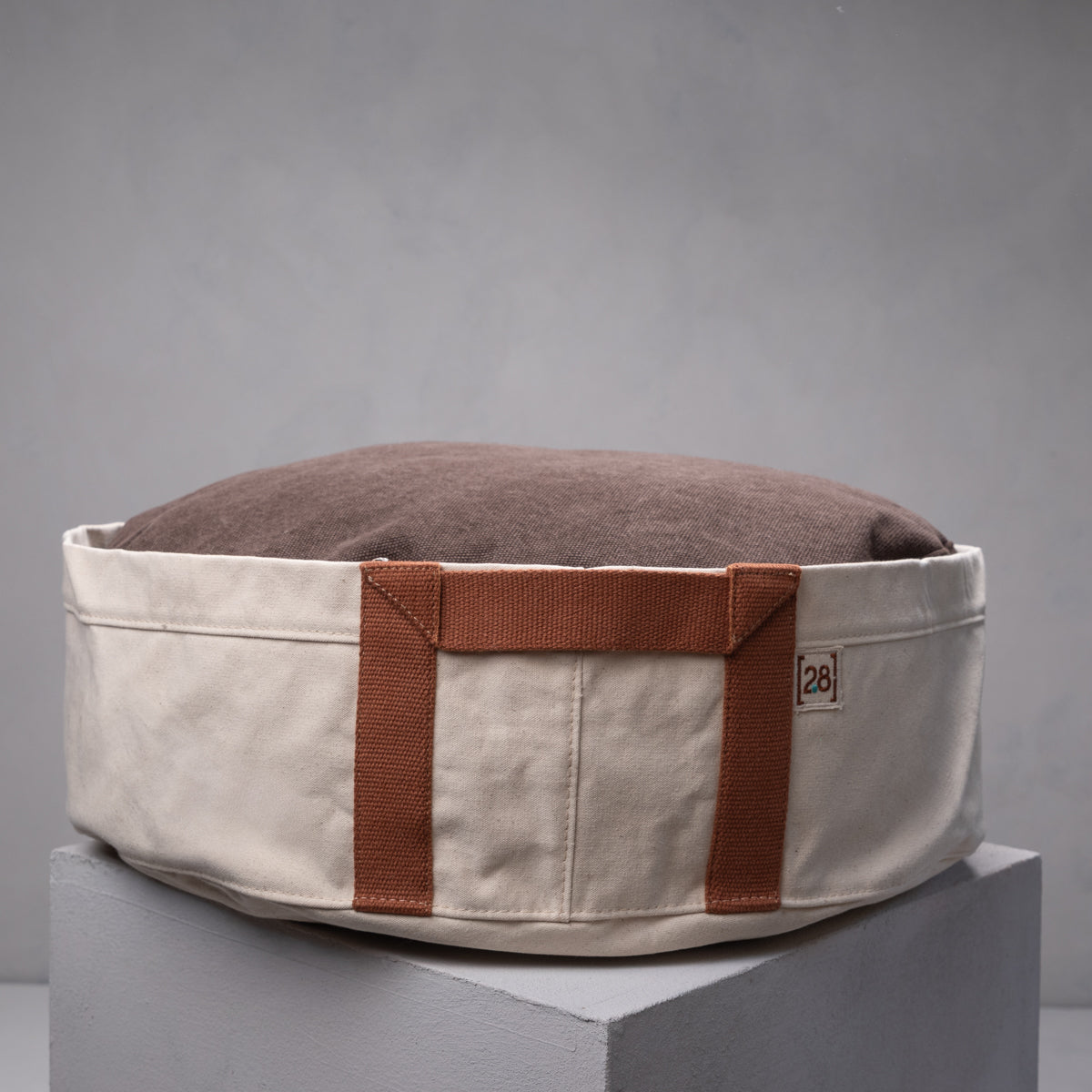
The Henri full-grain leather dog bed uses Italian cowhide tanned to CEE standards — each piece is one of a kind, with natural variation in grain and tone that makes it impossible to replicate at scale. This is what genuine material quality looks like in practice.
The Bruce cowhide placemat follows the same logic: a material that is naturally equipped for the conditions it encounters — moisture, cleaning, daily contact — without requiring treatments or coatings to perform.
Saffiano leather
Saffiano is a cross-hatch embossed leather finished with a wax treatment that gives it notable scratch resistance and ease of cleaning. Originally associated with high-end fashion accessories, it translates well to dog accessories for its practicality: it wipes clean easily and holds its surface over time.
The René collar and leash use printed Italian leather with hand-painted bone-colored edges — a more refined take on a material that is typically associated with structured bags. The edges are painted by hand, which is a detail you only find in workshops where pieces are handled individually rather than processed in volume.
Why the origin of leather matters more for dog accessories than for most products
A dog collar or leash is not an occasional-use item. It is worn for hours daily, exposed to weather, sweat, water, and friction, and expected to hold hardware securely under tension. The difference between leather that performs well over two or three years and leather that begins to crack, stiffen, or shed within months comes down almost entirely to the tanning method and raw material quality.
Italian leather's resistance to this kind of wear is not a marketing claim — it is a function of the vegetable tanning process, which produces a denser fiber structure than chrome tanning, and the finishing methods that protect without sealing the leather against breathability. A well-made Italian Nappa collar softens slightly with use and body heat. A poorly made leather collar becomes brittle under the same conditions.
There is also the question of contact safety. Dog accessories sit against skin and coat for extended periods. Leather tanned with chromium salts at lower quality standards can contain residual chemicals that cause skin irritation. Italian tanneries operating to EU standards — and particularly those using vegetable tanning — produce a material that is demonstrably safer for that kind of prolonged contact.
Craft and material together
Material quality sets the ceiling. What determines whether you reach it is the craft that follows.
The artisans who work with these leathers in Veneto bring a precision that is difficult to replicate at scale. Braiding Nappa leather to the correct tension so that the finished collar is both soft and structurally sound is not a mechanical process — it requires trained hands and accumulated experience. Hand-painting leather edges. Calibrating braid width to the diameter appropriate for each collar size. These are the details that differentiate a product that holds up over years from one that deteriorates within months.
At 2.8, the material and the craft are treated as inseparable. Neither justifies the other on its own. The leather sourced from a 60-year-old Italian supplier becomes a product worth owning only because the artisans working with it bring the skill to realize what the material is capable of.
Browse the full walking collection — collars, leashes, and harnesses — at duepuntootto.com.