
How to Care for a Leather Dog Collar and Leash
A leather collar and leash used daily will encounter rain, mud, dog fur, perspiration, and the accumulated contact of regular handling. None of this is damaging if addressed correctly. The difference between a leather product that lasts years and one that degrades within months almost always comes down to routine — specifically, how consistent and how simple it is. This guide covers what to do, how often, and what to avoid.
Why the leather matters for how you care for it
Not all leather responds to care in the same way. The materials used across the 2.8 walking collection have specific properties that determine both what happens to them under use and what they need to stay in condition.
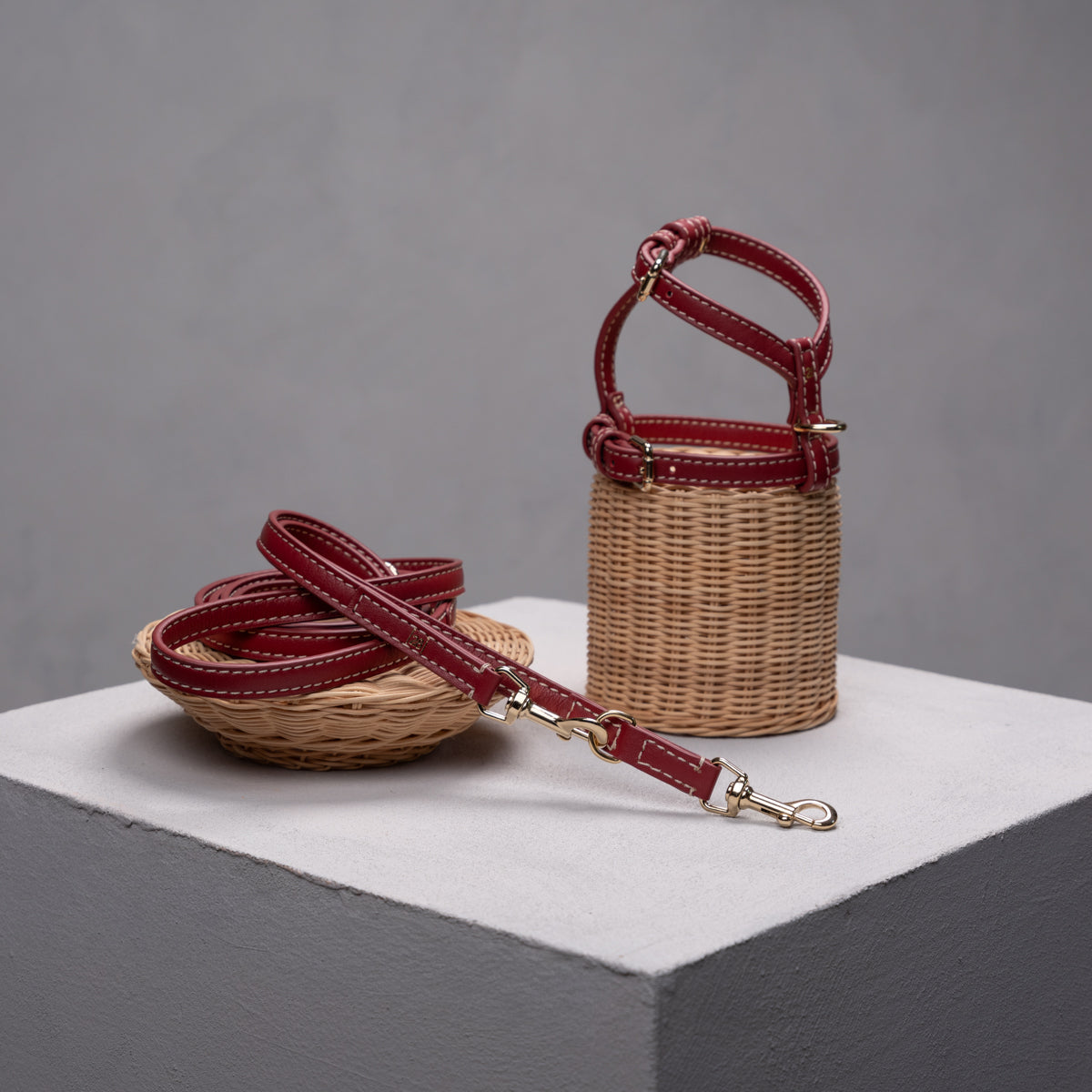
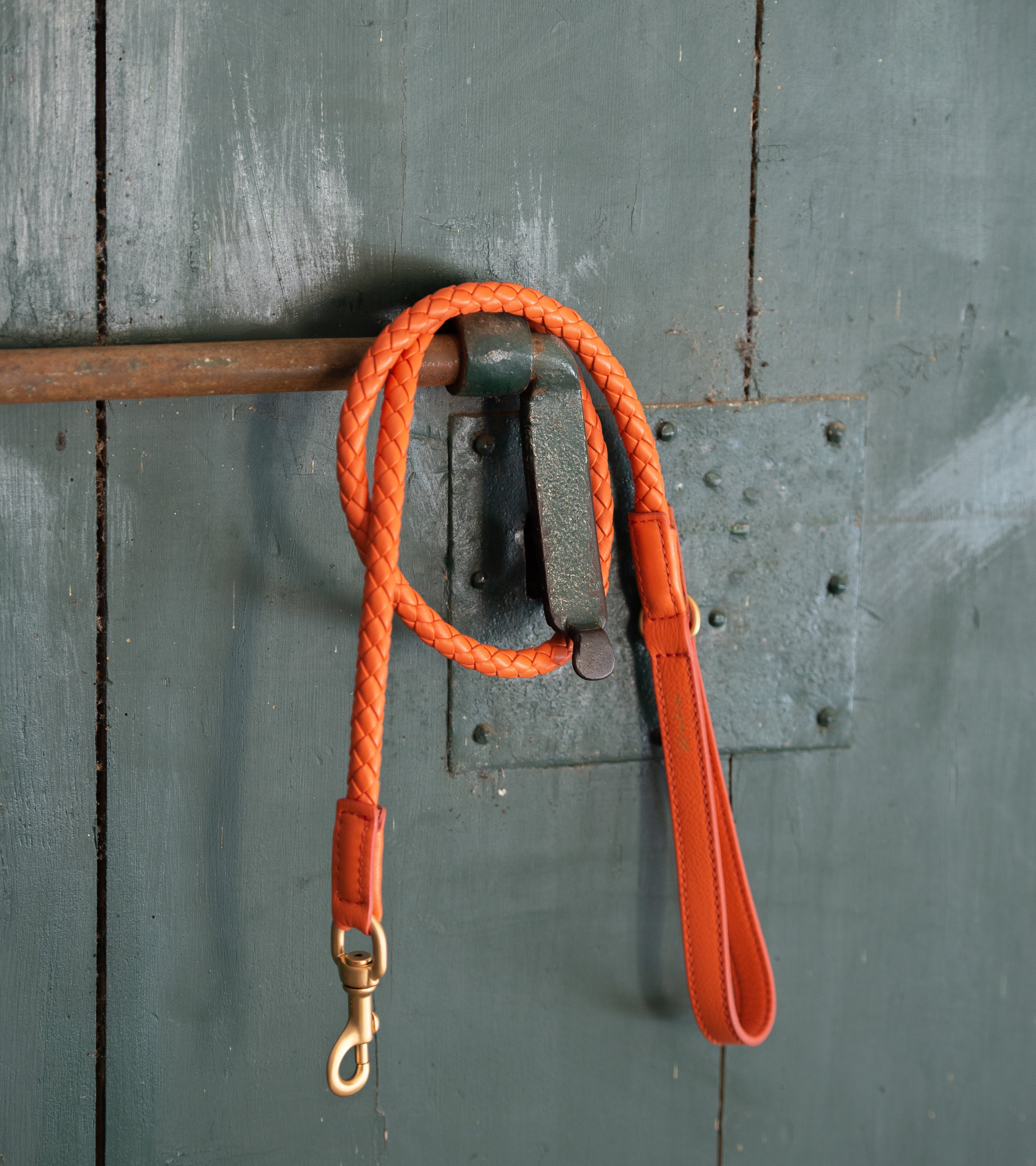
Braided Nappa leather — used in the Ferdinando collar and leash and Mario greyhound collar — is full-grain leather tanned with a vegetable process that leaves it soft, breathable, and naturally porous. The braided construction creates a rounded cross-section that sits gently against the coat, but also means the leather surface runs in multiple directions, with small channels between the braided strands. Dirt and moisture can settle into these channels, which makes prompt wiping after muddy walks more important than it would be on a flat collar. The material's porosity also means it responds well to the natural oils from regular hand contact — a leash handled daily will often maintain its condition better than one that is left unused.
Daily maintenance
The most important care habit costs no time and requires nothing more than a soft damp cloth. After each walk, a quick wipe removes surface dirt, dried mud, and the natural oils from both the dog's coat and your hands before they have a chance to accumulate and work into the leather.
This single habit does more for the long-term condition of a collar and leash than any occasional deep-cleaning routine. Wipe clean regularly with a soft, damp cloth. That is the entirety of daily maintenance for the braided Nappa leather collection.
The cloth should be soft — microfibre or similar — and damp rather than wet. Excess water on leather is exactly what routine maintenance is designed to avoid. Wring the cloth out before use.
Deeper cleaning
When surface wiping is not sufficient — after a particularly muddy walk, or after a period of more intensive use — a deeper clean is appropriate.
For braided Nappa leather, use lukewarm water with mild natural soap. Lukewarm is the operative word: hot water strips the leather of its natural oils, accelerating drying and eventual cracking; cold water is less effective at lifting grime and requires more friction, which is not good for the surface. A mild, natural soap — glycerin-based or similar — will lift embedded dirt without introducing harsh chemicals that alter the leather's finish or pH.
The process: dampen a cloth with the lukewarm soapy water, wring it out well, and wipe the collar or leash in the direction of the braid. Work soap into the channels between braided strands gently with the cloth rather than with any kind of brush. Rinse with a second damp cloth, plain water, and allow to air dry at room temperature.
Drying after water exposure
Water is the variable that most affects leather condition, and the drying process matters as much as the cleaning itself.
Avoid soaking, prolonged water exposure, or direct sunlight to protect the leather. If the collar or leash gets wet — a rain shower, an unexpected puddle, a dog that finds water before you notice — remove it at the earliest opportunity, pat dry with a soft cloth to remove surface moisture, and allow it to air dry naturally at room temperature.
The two things to avoid during drying are heat and sunlight. A radiator, a hairdryer, leaving the collar on a windowsill in direct sun — all of these accelerate drying faster than the leather can accommodate, causing the fibers to contract unevenly, which leads to stiffness and eventually cracking. The leather needs to dry at its own pace.
Saltwater deserves particular mention. Sea water leaves salt crystals in the leather as it dries, which are abrasive to the fiber structure from the inside out. If the collar or leash has been exposed to salt water, rinse with fresh water first to flush the salt out before allowing it to air dry. This applies to the metal hardware as well — salt accelerates corrosion on all metal fittings regardless of finish quality.
What to avoid
A short list of things that cause damage more quickly than almost anything else:
Soaking. Even brief immersion — not just swimming, but leaving a wet collar in a plastic bag, or storing it while still damp — introduces moisture throughout the leather's thickness rather than just on the surface. This can cause the fibers to swell, the colors to bleed in less stable leathers, and mold or mildew to develop in a matter of days in humid conditions.
Heat sources. Radiators, direct sunlight through glass, leaving the leash in a hot car — all strip moisture from the leather faster than it can replenish naturally.
Harsh cleaning products. Anything containing alcohol, bleach, or strong solvents will alter the leather's surface finish and strip its natural oils. Avoid baby wipes, household surface sprays, and anything not specifically formulated for leather or designated as a mild natural soap.
Prolonged contact with water. Remove the collar before swimming, bathing, or any activity where the dog will be fully submerged. This is simply protective — the collar is not designed for water immersion and extended exposure will shorten its lifespan regardless of care taken afterward.
Checking for wear
A collar or leash under daily use will show wear over time — and knowing what to look for matters, because a collar that is compromised at any structural point should be retired regardless of how good it still looks.
Check the following at least monthly:
Stitching. Any loosening or fraying around the D-ring or buckle attachment points means the hardware is becoming less securely held. This is the primary structural risk point in any collar.
The braid. In braided Nappa, look for any strand that has begun to separate from the others or that shows a thin or worn spot. A collar's strength is distributed across the braid — a compromised strand affects the whole structure.
Hardware. The D-ring should move freely and lie flat. Buckle teeth should engage cleanly. Any stiffness or catching in the hardware mechanism warrants closer inspection.
The holes. Leather around adjustment holes is under repeated stress. Check that the holes are cleanly defined rather than beginning to tear at the edges.
Do not use the collar if it shows signs of damage, weakened stitching, or broken hardware. A leash that fails at the clasp during a walk, or a collar that gives at the D-ring, is a safety failure regardless of its appearance. The standard for replacement is function, not aesthetics.
Storage
When not in use, store the collar and leash flat or loosely coiled in a cool, dry place away from direct light. Avoid folding or creasing — a sharp fold in leather held over time will leave a permanent mark at that point. A drawer, a dedicated hook, or the original packaging all work well. Do not store in an airtight container or plastic bag, which traps moisture.
The leash handle
The leash handle is the part of any leash that receives the most sustained human contact — natural oils from the hand, grip pressure, repeated bending at the same point. It is also the part most owners think about least in terms of care.
In practice, a leash handle that is handled every day benefits from exactly that contact — the oils from regular use keep the leather at the handle supple without any additional conditioning required. What matters more is what happens at the edges of the grip, where the braid transitions to the clasp hardware. Keep that transition zone clean and check the hardware attachment regularly.
Browse the full walking collection — collars, leashes, harnesses, and coordinating accessories — at duepuntootto.com.