
Casentino Wool: The Tuscan Fabric Behind the Ansel Blanket
Some materials have history long enough to speak for themselves. Casentino wool has been keeping monks, merchants, horses, and shepherds dry and warm since the fourteenth century. It was worn by Verdi and Puccini, used by the Medici, and eventually found its way into the collections of Gucci, Prada, and Givenchy. For 2.8, it is the fabric behind the Ansel blanket and an iconic version of the Henri dog bed. Understanding what it is and how it is made explains why.
Where it comes from
Casentino takes its name from the valley in eastern Tuscany, north of Arezzo, where the Arno river begins its journey toward Florence. The valley has been producing this specific cloth since at least the 1300s — a documented textile tradition that predates the Renaissance and is tied directly to the geography of the location: local sheep, local rivers to power the mills, local forests to heat the dye water.
The fabric was originally practical in the most uncompromising sense. It was intended for people and animals working outdoors — monks at the nearby Camaldoli and Verna monasteries, shepherds on the hillsides, coachmen protecting their horses from the cold. Its properties were not designed for elegance. They were designed for weather.
What happened next is the kind of story that only Italian craft produces: a material built for farmers and monks was eventually adopted by the Florentine aristocracy, worn by the Medici, and carried by Audrey Hepburn in Breakfast at Tiffany's. The Casentino cloth is considered both "poor" and refined — first because there are still many who do not know it, and second because compared to new generation hyper-technical materials it is of unparalleled character. That balance between utility and elegance is precisely what makes it interesting.
Today, the Premiata Tessitura TACS has been operating for over 50 years in the manufacturing sector, producing Casentino cloth based on centuries-old working methods. Founded in the village of Stia — the historic heart of Casentino production — and now in its third generation, TACS is among the few remaining producers working to the original standards of the valley. The Ansel blanket is produced in accordance with TACS quality benchmarks, which means the cloth is held to a production standard with a direct lineage to the medieval mills.
What makes it different: the rattinatura process
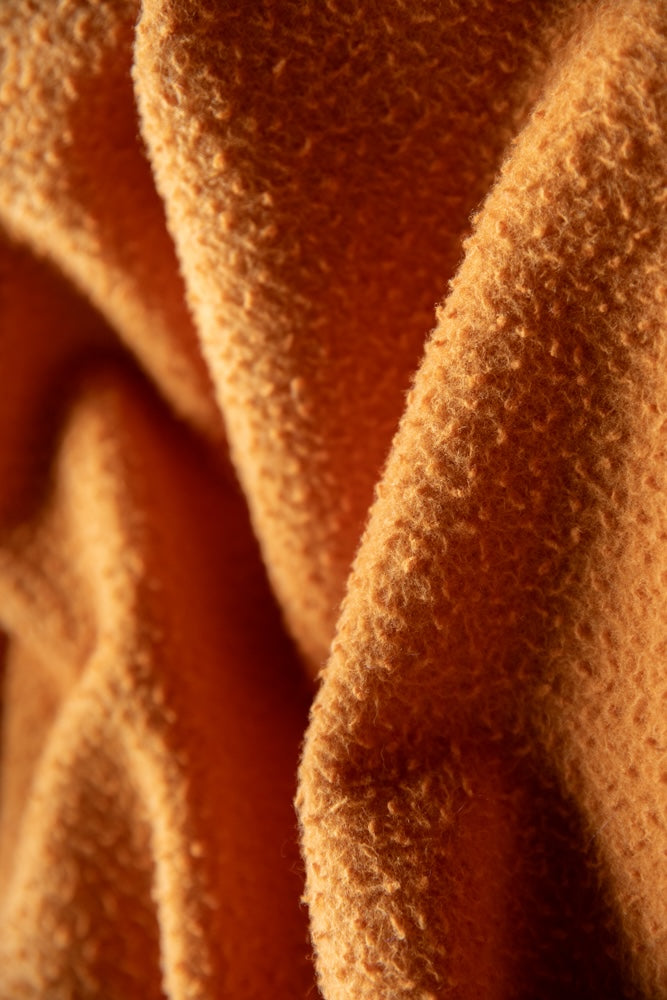
Casentino wool is not simply woven wool. What gives it its distinctive surface — the dense, slightly nubby texture that is immediately recognizable — is a finishing process called rattinatura.
The iconic water-repellent fabric is created with a process called rattinatura, which compresses the woven wool fabric to create a denser, thicker and more compact material that has an enhanced ability for keeping its wearer warm and dry in harsh weather. Historically this was done by brushing the cloth with stone. The result is a two-layer surface: a dense, felted base that provides structural integrity, and a raised outer layer of compressed fibers that repels water and distributes abrasion.
The water resistance is inherent to the construction, not applied as a treatment. The main operations to obtain the Casentino cloth were the fulling to make it waterproof, the gauze to have a hairy side, and the rattinatura to create curls — which served to make the fabric more resistant to wear. The curled surface that looks like intentional texture is in fact a structural decision: it increases the surface area of the outer layer, which improves both insulation and weather resistance simultaneously.
The nubby texture makes this thick wool resistant to wear and foul weather, and suited to all kinds of uses. It provides perfect thermal insulation while allowing the fabric to breathe. This is the combination that has made it relevant for seven centuries: warmth without weight, weather resistance without coating, breathability without thinness.
Why it translates well to a dog blanket
The properties that made Casentino wool suitable for shepherds working through Tuscan winters are the same properties that make it a great choice for a dog blanket used in a home.
Natural water and dirt resistance. The rattinatura compression means the surface of the cloth is dense enough to resist moisture before it penetrates. For a blanket used by a dog that comes in from a walk, or simply moves through a home with the unpredictability of daily life, a material that resists rather than absorbs is a practical advantage. This does not require any chemical treatment — it is structural.
Warmth that breathes. Casentino's two-layer surface traps air in the raised outer fibers while the dense base regulates temperature. A dog sleeping under or on the blanket benefits from the same thermal regulation that made this fabric the preference of outdoor workers in the Italian highlands: consistent warmth without overheating.
Durability under sustained use. The rattinatura process gave the cloth an inimitable strength and warmth that was coveted by everyone from Franciscan monks to Medici nobles, who used it to protect both their own backs and those of their prized horses. A material that was considered robust enough to cover horses in use — and was used to upholster Medici carriages — is not a delicate fabric. Daily contact, regular washing at 30°C, and the kind of sustained pressure a dog applies are conditions this cloth was designed to withstand.
Washability. Machine washable at 30°C on a gentle cycle, air dried flat. The felted structure of Casentino wool is more dimensionally stable under washing than standard knitted or loosely woven wool, which is why it holds its shape across regular cleaning cycles.
The colour question
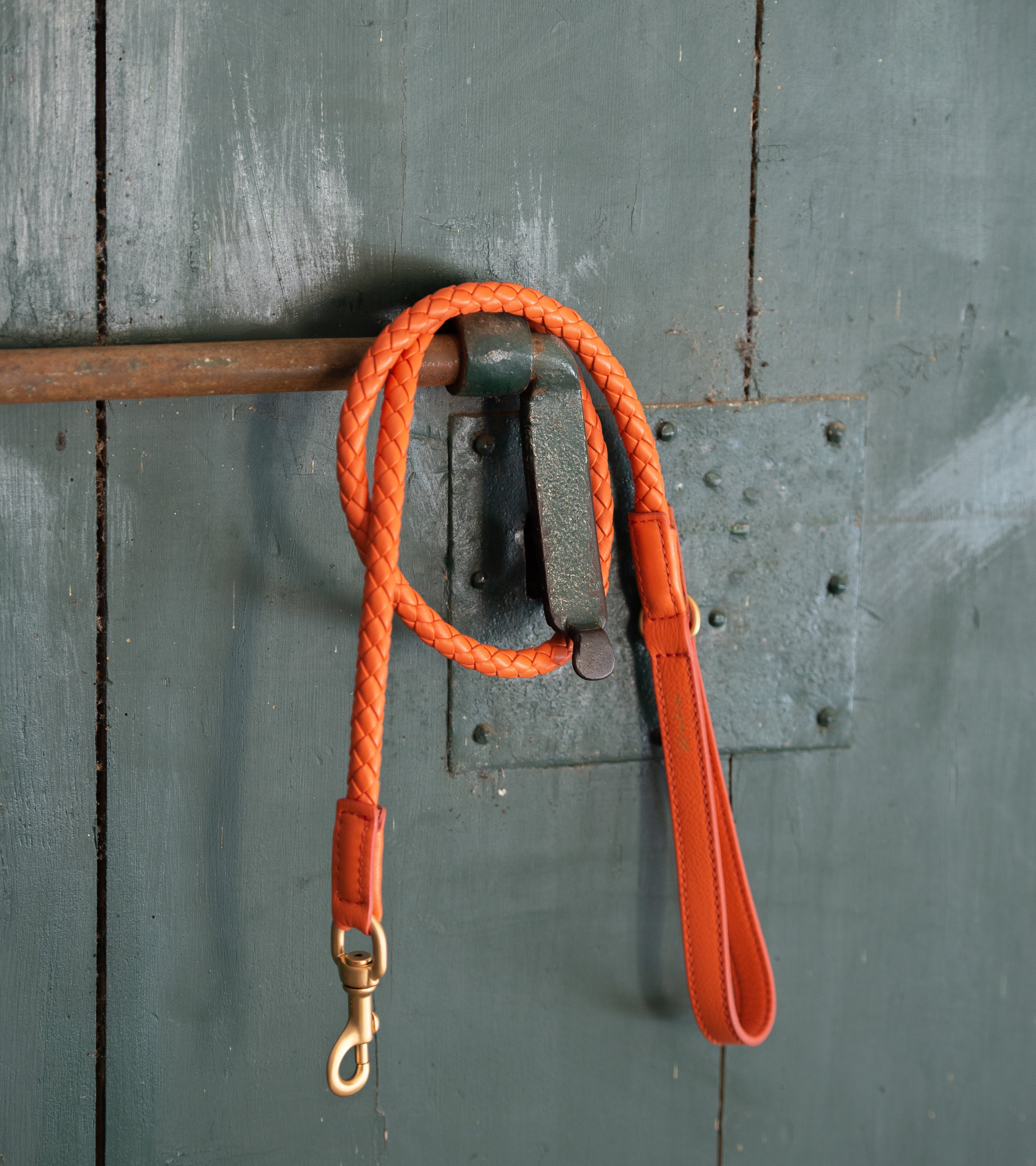
Anyone familiar with Casentino will know its signature tones: the vivid orange called becco d'oca (goose-beak orange) and the deep emerald green that has accompanied it for centuries. In the 16th century, in an attempt to improve the fabric's water resistance, alum was applied to the dyeing process, causing a reaction that turned the wool bright orange — an unintentionally vibrant shade that has held its appeal for centuries.
The accident became an identity. The Ansel blanket is available in the full range of 2.8 colours — not only limited to the traditional palette. For those who want the orange, it is there. For those who want the material without the statement, that is also there.
In the 2.8 collection
The Ansel blanket is 2.8's primary use of Casentino wool — a blanket designed for indoor use, with a vegetable-tanned leather handle and an embroidered edge finish. It machine washes at 30°C and is available in multiple colourways.
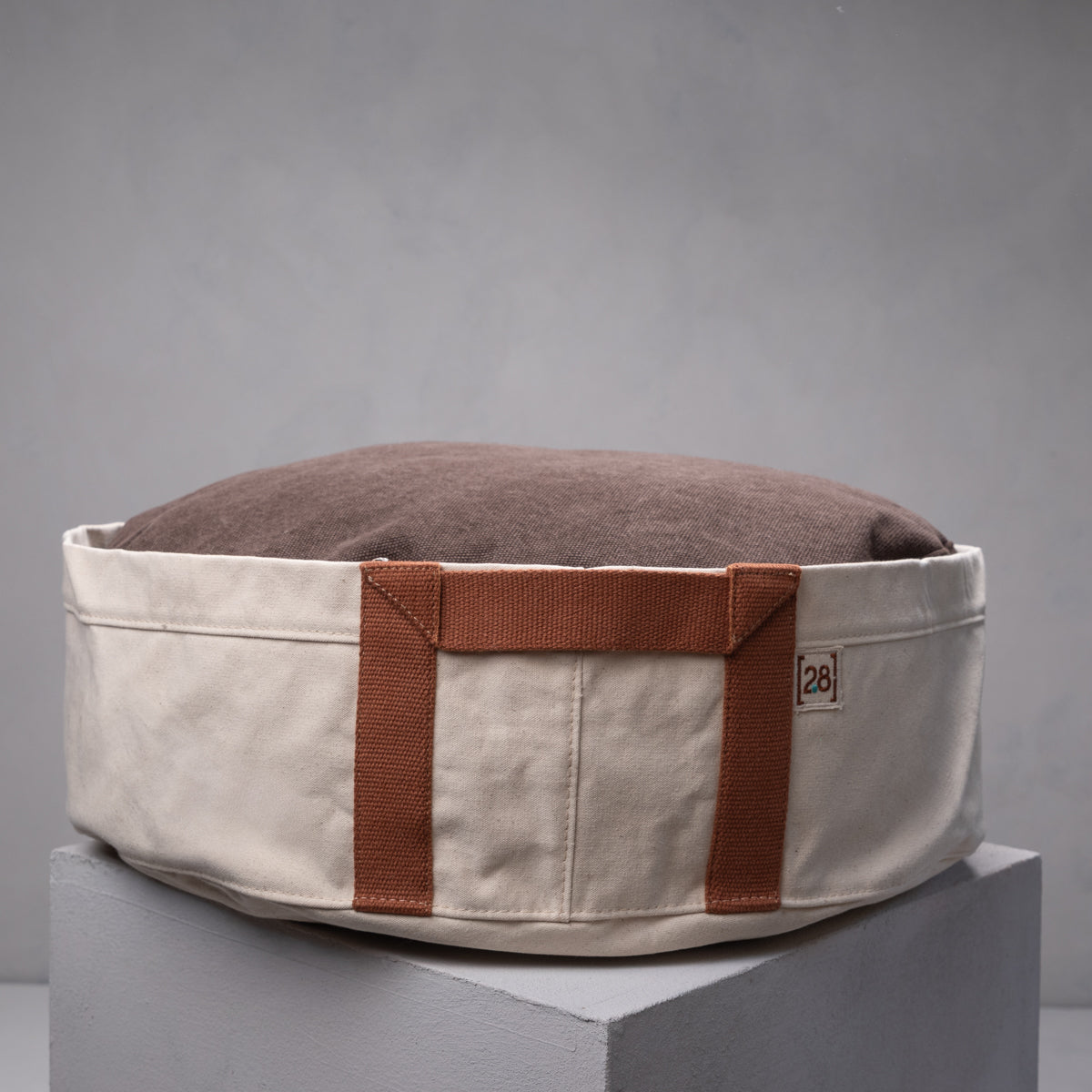
Casentino also appears as a material option in the Henri dog bed, where the same structural properties — water resistance, durability, natural insulation — translate directly into a bed cover that handles daily contact with ease. The Henri Casentino version pairs the cloth's inherent weather resistance with the bed's non-slip base and removable, washable cover construction.
Both represent the same logic: a material with seven centuries of proven performance, produced to the historical standards of the valley where it was invented, applied to objects that are in daily contact with animals for years at a time.
Browse the full collection of sleeping accessories and blankets at duepuntootto.com.