
Ceramic vs Stainless Steel Dog Bowls: Which Is Better?
A dog uses its bowl twice a day, every day, for years. Few objects in the house are handled as often, washed as often, or left on the floor in full view.
Most bowls are made of one of three materials: stainless steel, plastic or ceramic. Each has real advantages. Here is how they compare, and why we chose to make ours only in ceramic.
Stainless steel, plastic, ceramic: how they compare
Stainless steel is practical. It is light, almost impossible to break, easy to clean and inexpensive. Its weakness is weight: a light bowl slides across the floor and tips over easily, and it rings against the tiles with every mouthful.
Plastic costs the least, but it wears quickly. Teeth and cleaning leave fine scratches where bacteria collect, and research on plastic food containers shows that scratched or heated surfaces can release microplastics. Some dogs also react to plastic with irritation around the chin. It is the material we would recommend least.
Ceramic is heavy, stable and quiet. A well-glazed surface is smooth and non-porous, so it stays clean and holds no odours. It keeps water cool for longer. The trade-off is that ceramic can chip if dropped, and the quality of the glaze matters more than with any other material.
|
|
Stainless steel |
Plastic |
Ceramic |
|---|---|---|---|
|
Stability |
Low, light |
Low |
High, heavy |
|
Hygiene over time |
Good |
Poor, scratches |
Good, if glazed and intact |
|
Noise during use |
Loud |
Quiet |
Quiet |
|
Breakage |
Unbreakable |
Cracks with age, loses plastic |
Can chip if dropped |
|
In the home |
Utilitarian |
Utilitarian |
An object you choose |
What to look for in a ceramic bowl
Not all ceramic is equal. Four details make the difference.
- A certified lead-free glaze. The glaze is the surface your dog eats from. Ask whether it is certified. Ours is tested and certified lead-free by ARPAV, the regional environmental protection agency of the Veneto.
- High-temperature firing. Firing at high temperatures makes the body denser and more resistant to knocks and to the heat of the dishwasher.
- A stable base. Anti-slip silicone feet keep the bowl in place on tiles, wood or stone.
- The right proportions. Wide enough for the dog to eat comfortably, deep enough to hold water without splashing.
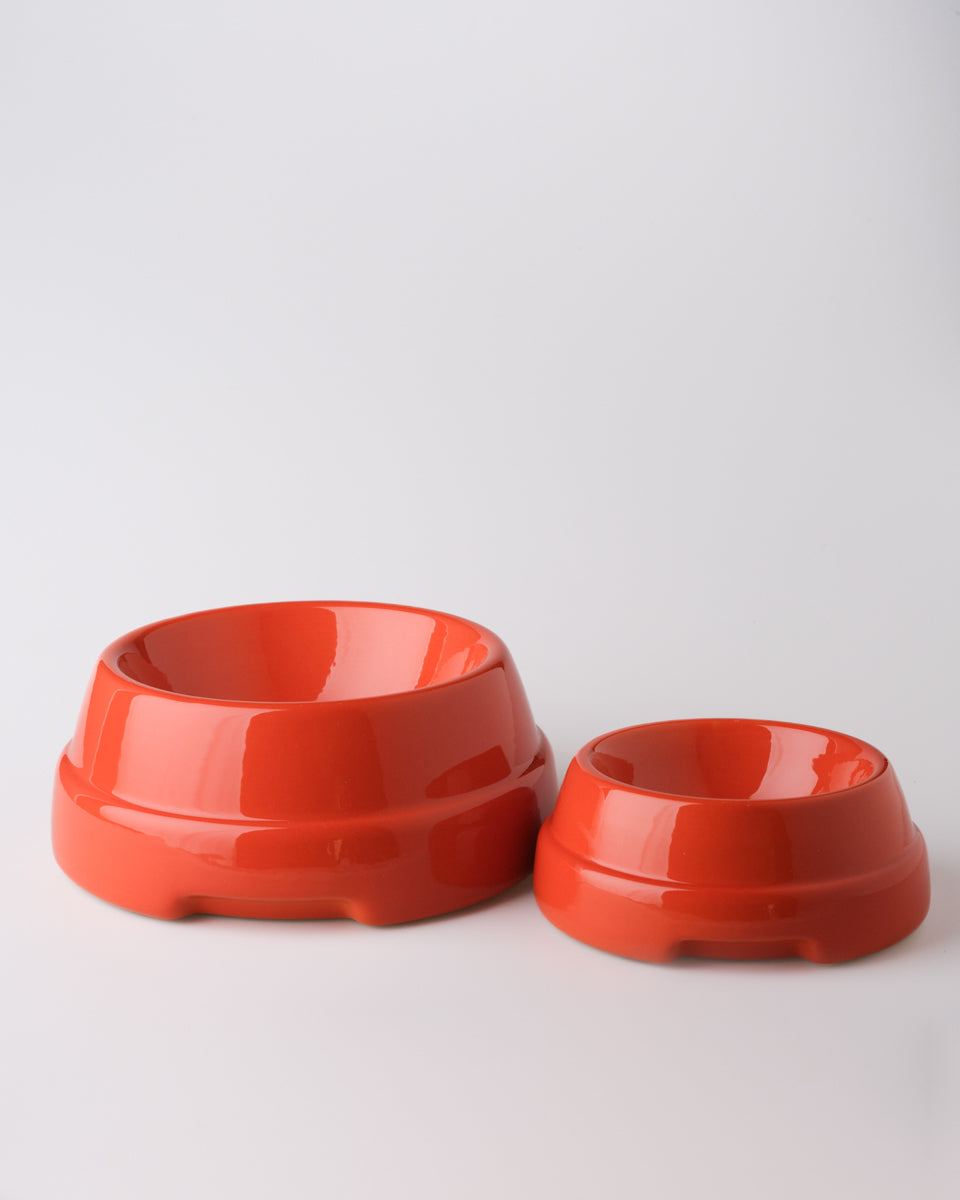
Our Sebastião bowl is made by a ceramic workshop in the Veneto that has worked with the same clay formulas for decades. It comes in two diameters: 15 cm, holding about 210 ml, for small dogs, and 21 cm, holding about 640 ml, for medium-sized dogs. It is dishwasher safe and made entirely in Italy.
Short-muzzled dogs and cats: why shape matters
French Bulldogs, Pugs, Boston Terriers, Shih Tzus and other short-muzzled breeds eat differently. In a deep bowl, their face reaches the rim before their mouth reaches the food. Many end up pushing the bowl around the room or leaving food at the bottom.
For these dogs, a shallower and wider shape works better: the food stays within reach and the face stays clear of the rim. Cats, whose whiskers are sensitive to contact, often prefer the same kind of bowl.
We designed the Sarah bowl for them. Same ceramic, same anti-slip feet, same dishwasher-safe finish, in two sizes: 12 cm and 17 cm. If you share your home with a flat-faced dog, you may also find our guide to walking a French Bulldog useful.
Caring for a ceramic bowl
- Wash it daily, by hand or in the dishwasher. Water bowls need it as much as food bowls.
- Check it from time to time. A chipped or cracked bowl should be replaced: damage breaks the glaze, and the surface underneath is no longer sealed.
- Keep two bowls, one for food and one for water, and alternate them while one is washed.
A stainless steel bowl does its job well. A ceramic bowl does the same job, stays where it is put, and belongs in the room. That is why we make ours only in ceramic.
Frequently asked questions
Are ceramic dog bowls safe? Yes, when the glaze is certified lead-free and the bowl is intact. Replace any bowl that is chipped or cracked.
Is ceramic or stainless steel better for dogs? Both are hygienic. Stainless steel is lighter and unbreakable. Ceramic is heavier, more stable and quieter, and keeps water cooler.
Can ceramic dog bowls go in the dishwasher? Most can. Ours are dishwasher safe.
What is the best bowl for a French Bulldog or Pug? A shallow, wide bowl that lets a short-muzzled dog reach the food without pressing its face against the rim.
Can cats use a dog bowl? Yes, if the shape is right. Cats usually prefer shallow, wide bowls that don't touch their whiskers.