
Traveling with Your Dog: What Actually Helps
Dogs are better travelers than most people expect. They adapt well to new places when a few things stay consistent — and once you've worked out your system, traveling with your dog becomes one of the more enjoyable parts of having one.
Here's what genuinely makes a difference.
Familiarity matters more than comfort
When a dog arrives somewhere new, they spend a lot of energy processing unfamiliar smells, sounds, and surroundings. The fastest way to help them settle is to bring something familiar into that new environment — something that smells like home and signals that it's safe to relax.
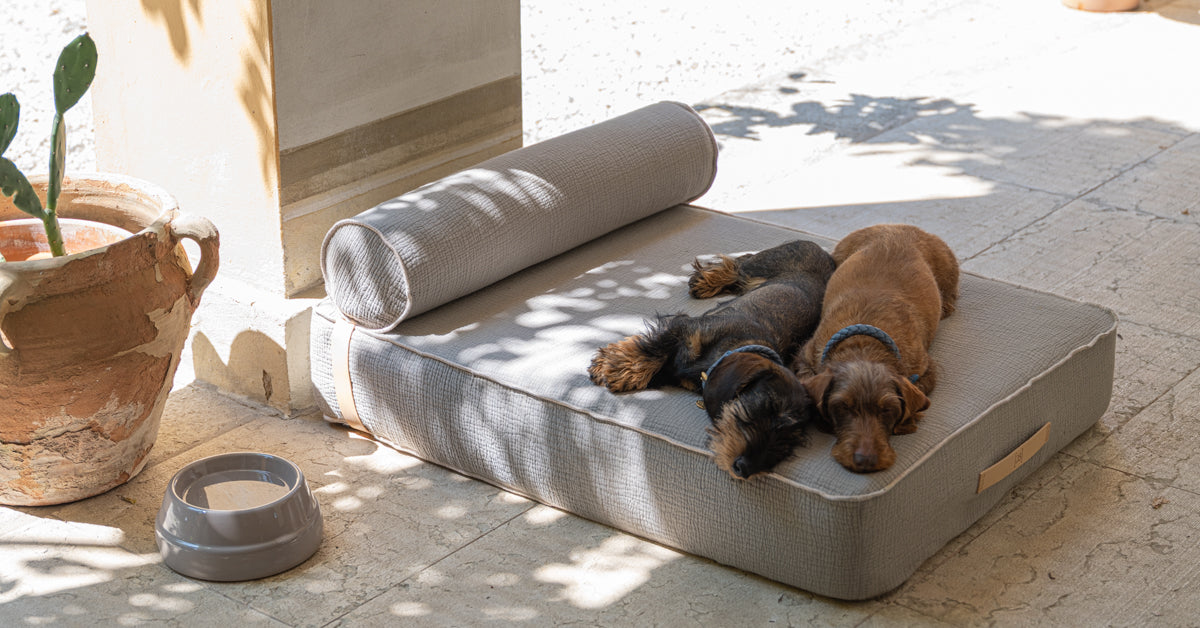
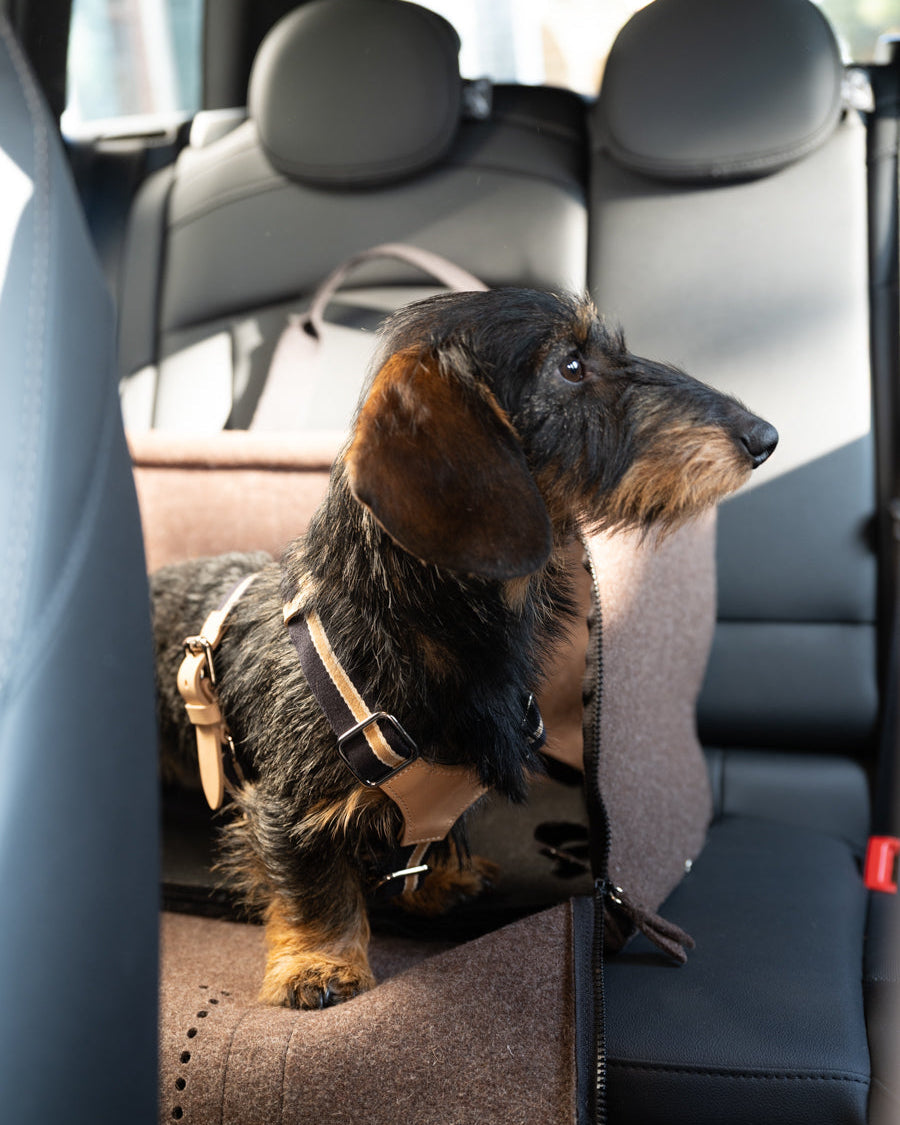
This is why a dedicated travel mat is one of the most useful things you can pack. It's not about cushioning — most dogs sleep anywhere perfectly well. It's about creating a consistent spot the dog recognises as theirs. Put it down in the hotel room, the rental apartment, or the corner of a restaurant, and a dog that knows the mat will head straight for it. The place changes; their spot doesn't.
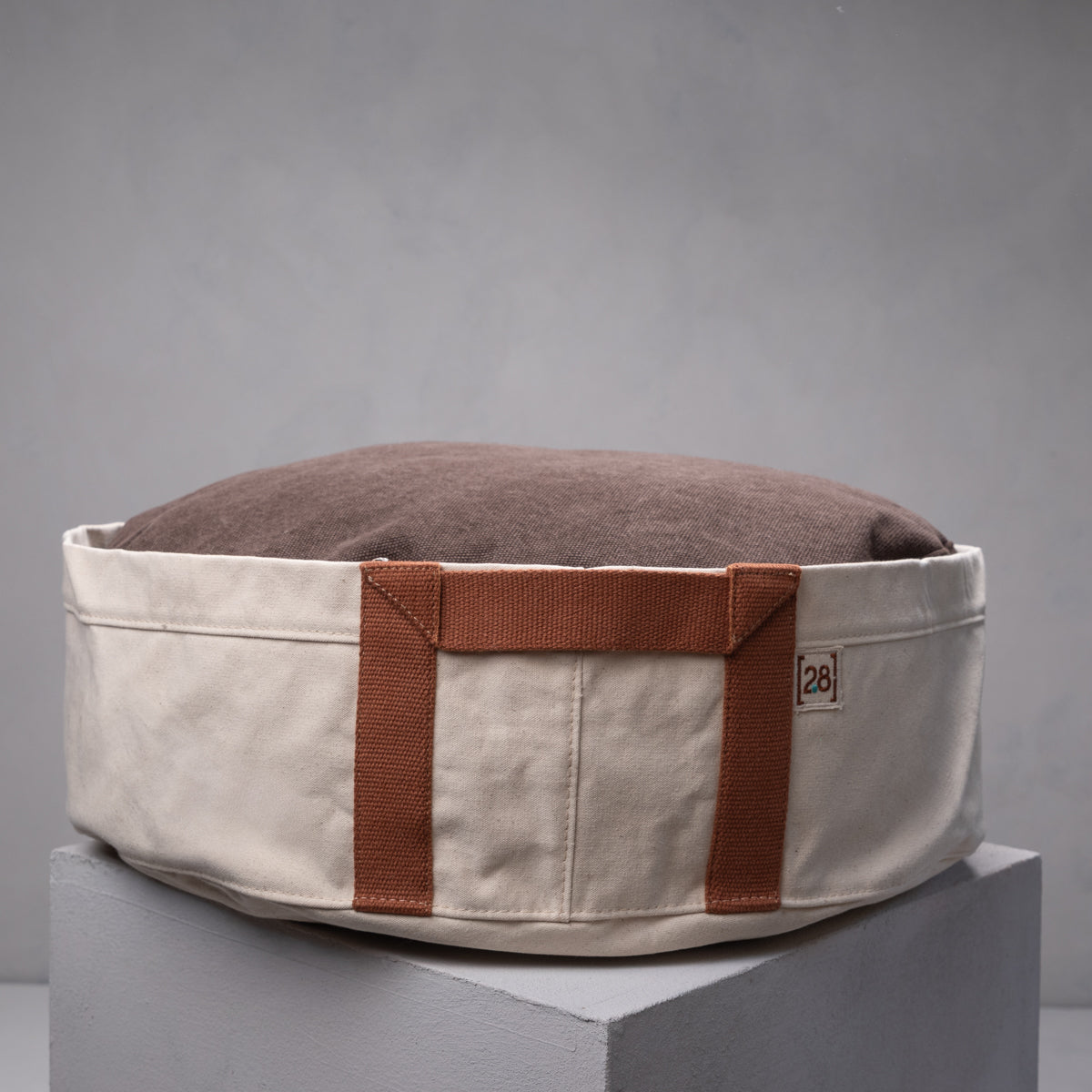
The Steve travel mat folds flat with snap buttons and has leather handles, so it's easy to carry and quick to set up. The Casentino wool version is naturally water-repellent — useful in the car trunk, on damp grass, or on the kinds of floors you'd rather not think too much about. The cotton and jute versions are lighter if you're watching pack weight.
An Ansel blanket works well alongside the mat — something warm and familiar for dogs that like to burrow, or for hotel rooms with aggressive air conditioning. Together they create a proper little corner that feels like theirs wherever you are.
Keep the routine intact
Dogs handle new environments much better when their daily schedule stays consistent. Walk times, feed times, sleep times — when those stay roughly the same, the novelty of the place is much easier for them to absorb.
This sounds simple but it's the single most effective thing you can do for a dog that gets anxious in new places. A dog that's been walked and fed on schedule will settle into a new room faster than one whose whole routine has been disrupted by travel logistics. It's worth building your own plans around this where you can.
Keeping the walk routine also means having the right gear with you — a leash and harness setup you trust, and poop bags you can actually find when you need them. The Martin poop bag holder clips directly to the leash so bags are always there. On unfamiliar streets in a foreign city, that's worth more than it sounds.
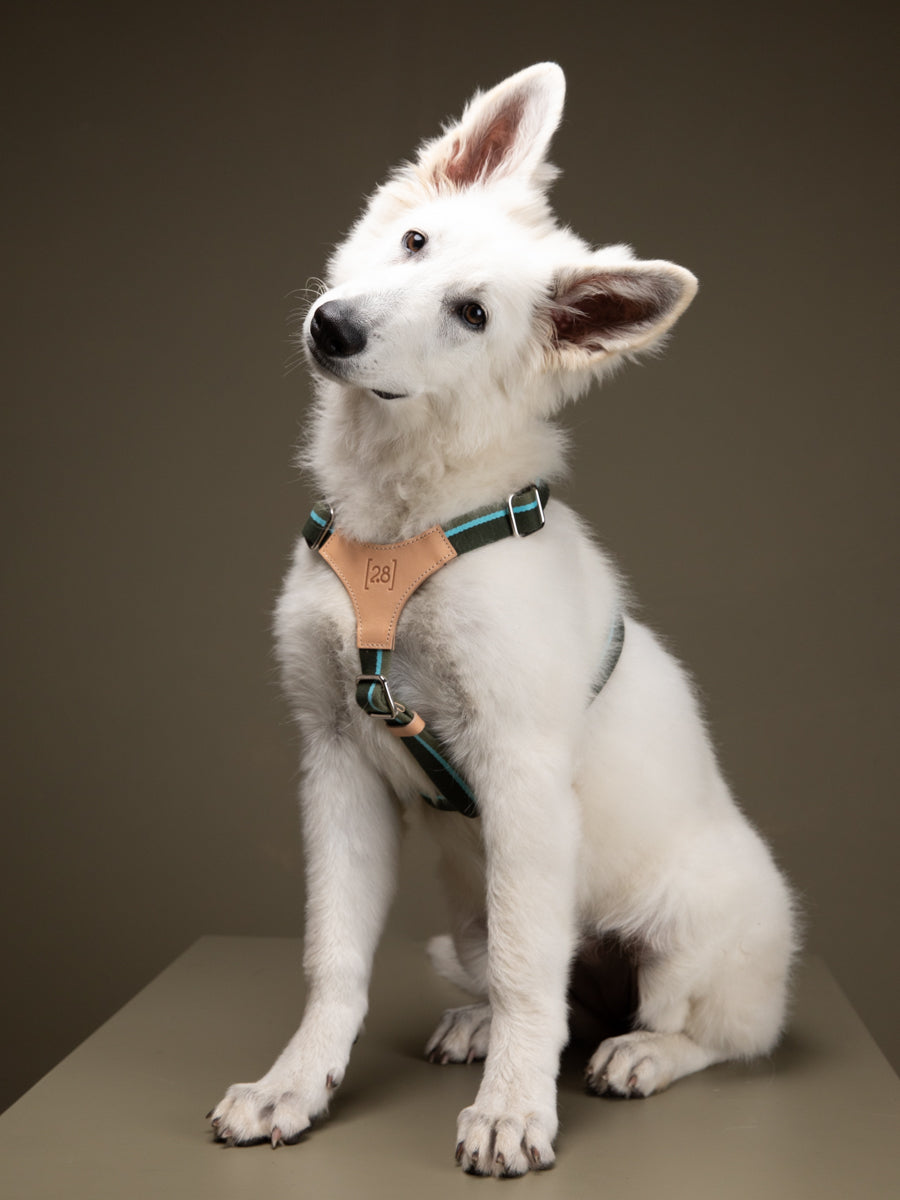
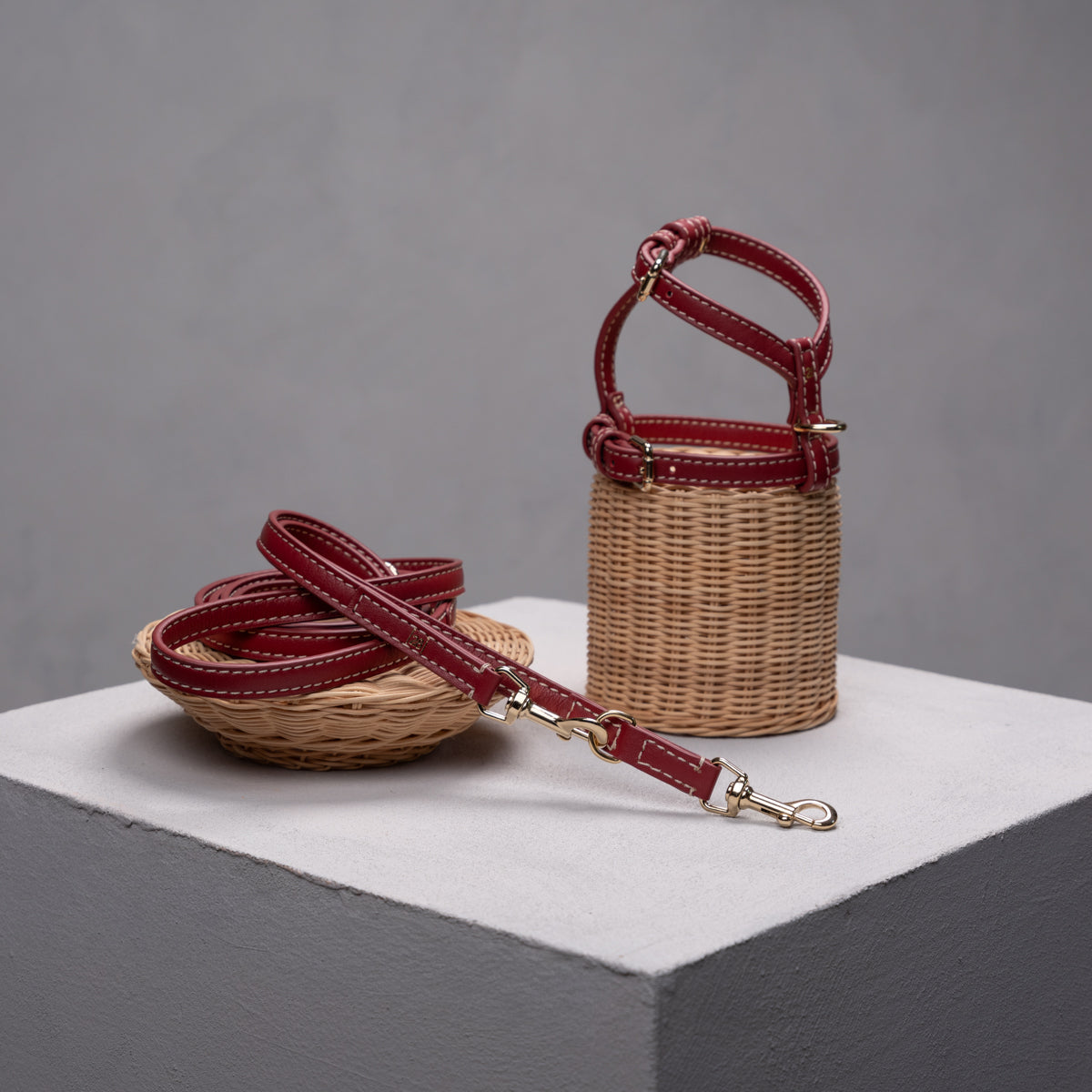
For the walking setup itself, the Ferdinando collar and leash travel well — the braided nappa is compact, doesn't tangle, and holds up to whatever conditions you encounter. For larger dogs or dogs that use a harness, the Franco harness is lighter than full leather and packs easily, which matters when you're already carrying a lot.
What to carry on you during the day
You don't need much on your person when you're out with your dog. Poop bags, a few treats, your phone, a travel bowl for longer days — that's about it. The mistake most people make is treating the dog's day bag like a full kit bag and ending up with something too heavy and cumbersome to enjoy carrying.
The Mini Inge handles the daily walk well — a small cross-body bag with a built-in poop bag holder, designed for the person rather than the dog. Compact enough for a city stroll, sturdy enough for a longer day out.
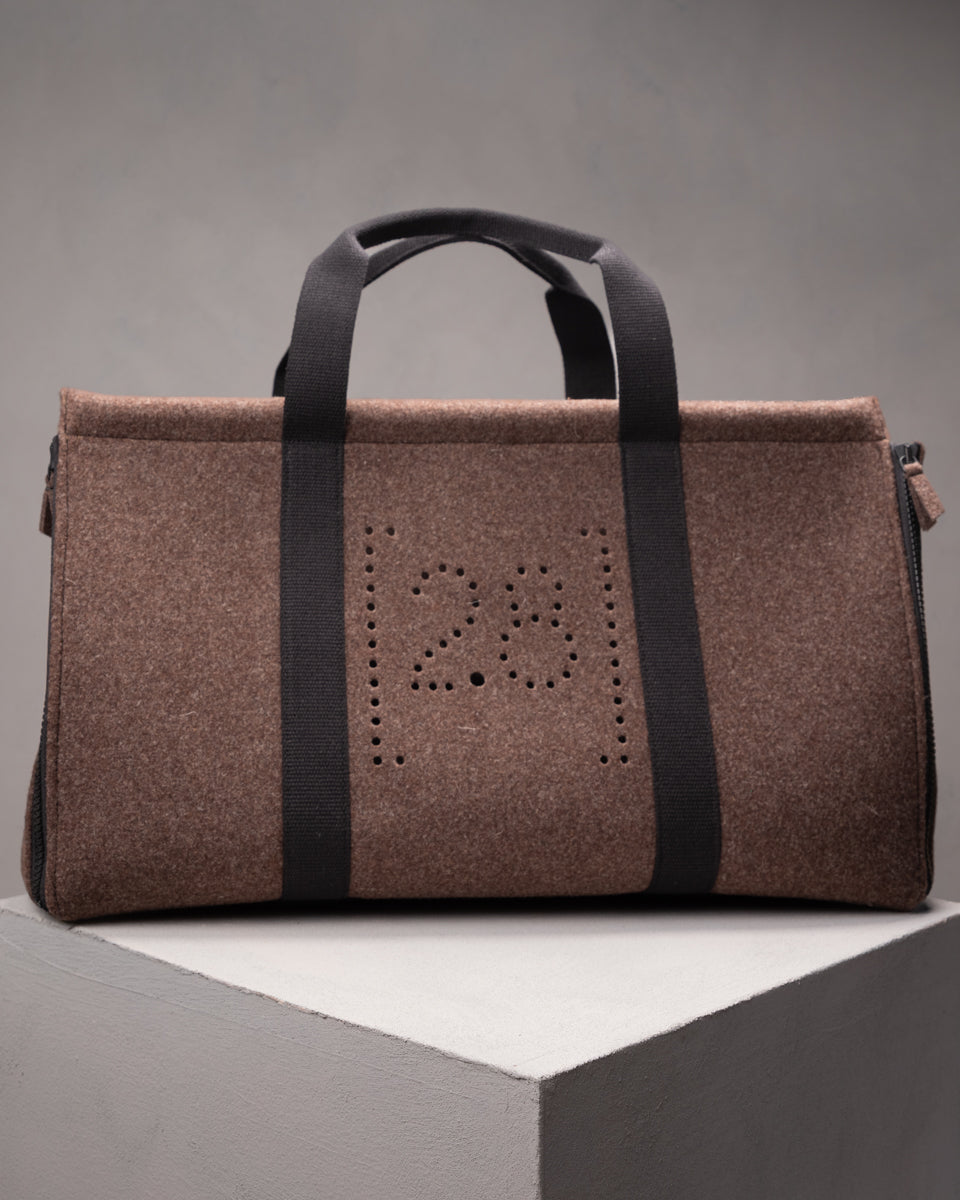
For multi-day trips where you're carrying more — documents, a spare leash, a travel bowl, a change of clothes for you — the Margaret bag gives you proper capacity without looking like a hiking pack. Available in bouclé wool, Casentino, and organic cotton. If you want something smaller and more structured for day use, the Mini Margaret in Casentino is a good fit.
Car travel specifically
Dogs travel better in the trunk than on the back seat — they have more room, they're less likely to get carsick from watching the road, and it's safer. A mat-lined trunk is noticeably better than a bare one: it gives them a defined space, reduces sliding on turns, and is easy to shake out when you arrive. The Steve mat works well for this.
Take a break every two hours on longer drives. Dogs need to stretch, drink, and go to the bathroom — and a dog that's had a proper break settles back into the car better than one that's been in for five hours straight.
Bring water from home for the first day or two of a long trip. Dogs can be reluctant to drink water that tastes different, and staying hydrated helps them handle the stress of travel better than almost anything else.
Never leave your dog in a parked car in warm weather. Temperatures in a closed car rise faster than most people expect, even on a mild day.
Pack a proper dog towel
If you're going anywhere with real weather — and most places worth going to have real weather — a good dog towel is worth the space. A wet dog is fine; a wet dog with no way to dry them is considerably less fine, especially in a hotel room.
The Sally cotton towel is large enough to actually do the job and rolls up small enough to live permanently in your travel bag. One of those things you forget you have until you need it, then can't imagine being without.
The logistics
A few practical things worth sorting out before you go:
Documentation. Crossing international borders with a dog usually requires a health certificate issued by a vet within a specific window before travel, plus vaccination records. Requirements vary by country and change periodically, so check the requirements for your destination well in advance — not the night before.
Accommodation. Dog-friendly in a hotel listing can mean almost anything. Call ahead to confirm the specifics — size or breed restrictions, fees, rules about leaving dogs unattended in rooms. Finding this out before arrival saves a lot of last-minute stress.
Let them explore on arrival. Give your dog ten minutes to sniff around a new space before you expect them to settle. It helps them feel secure faster and means you're not fighting low-level anxiety for the rest of the evening.
Expect more sleep than usual. New environments involve a lot of sensory processing. Dogs often sleep more in the first day or two of a trip — this is normal, and generally a sign that things are going well.
Browse the full travel range — mats, bags, and walking gear, all made in Italy.