
The Dog-Friendly Home: How to Design a Space That Works for Both of You
A dog-friendly home isn't one that's been rearranged around the dog. It's one where the dog has been genuinely accounted for — where the objects they use every day are as well-chosen as everything else in the room, and where nothing has been shoved into a corner hoping no one will notice.
Getting there is mostly a matter of thinking through each area of the home with both occupants in mind. Here's how to do that, room by room.
The entryway
The entrance is where most dog-home friction begins. It's where the leash goes when you come in, where muddy paws meet the floor, and where the walking gear accumulates if you don't have a plan for it.
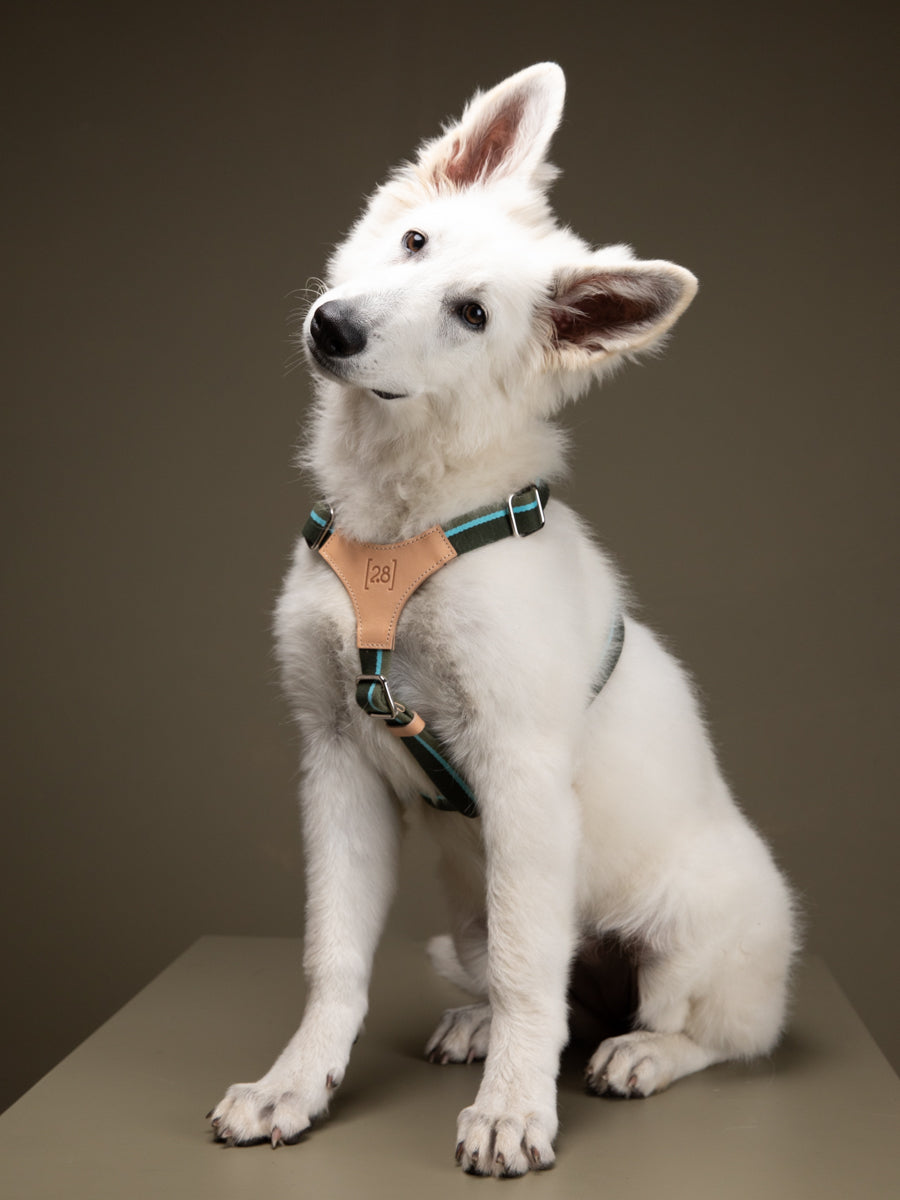
The simplest fix is a designated hook or shelf for the walking accessories — leash, collar, bags — at the door. When the walking gear has a home, it stops spreading across the hallway. The Ferdinando collar and leash are worth hanging somewhere visible rather than bundling into a drawer; braided nappa leather looks fine on a hook, and keeping them accessible means you're more likely to handle them properly rather than yanking them off a doorknob in a hurry.
The Mini Inge lives well at the door too — hung up or left on a shelf, it keeps the walk essentials (bags, treats, keys) in one place and means you're not patting your pockets on the way out. The Martin poop bag holder clips directly to the leash, which solves the problem of remembering to bring bags without requiring any thought.
For the floor, a washable mat near the entrance handles wet paws after rain and gives the dog a place to stop and settle when you come in. It doesn't need to be elaborate — it just needs to exist, and to be something you can actually wash without drama.
The living room
This is where most of the significant design decisions get made, because it's where the dog spends most of their time with you.
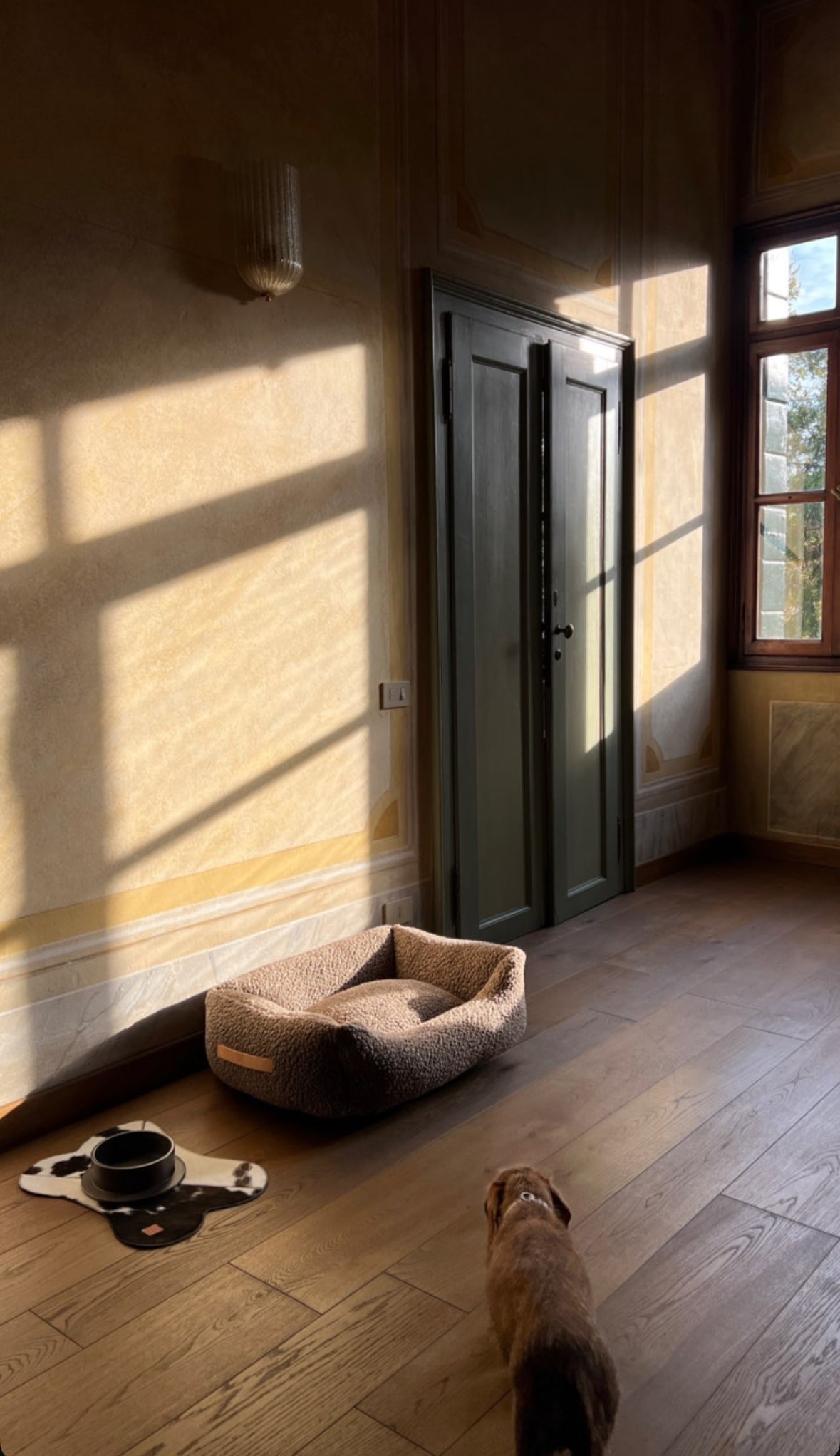
Bed placement matters more than bed choice. A well-chosen bed in the wrong position will always look wrong. The principle we return to often: anchor the bed to something. Next to the sofa, it reads as part of the seating area. In an alcove or recessed corner, it becomes a defined space the dog chooses to return to. Floating in the middle of the room, it just looks like something you haven't dealt with yet.
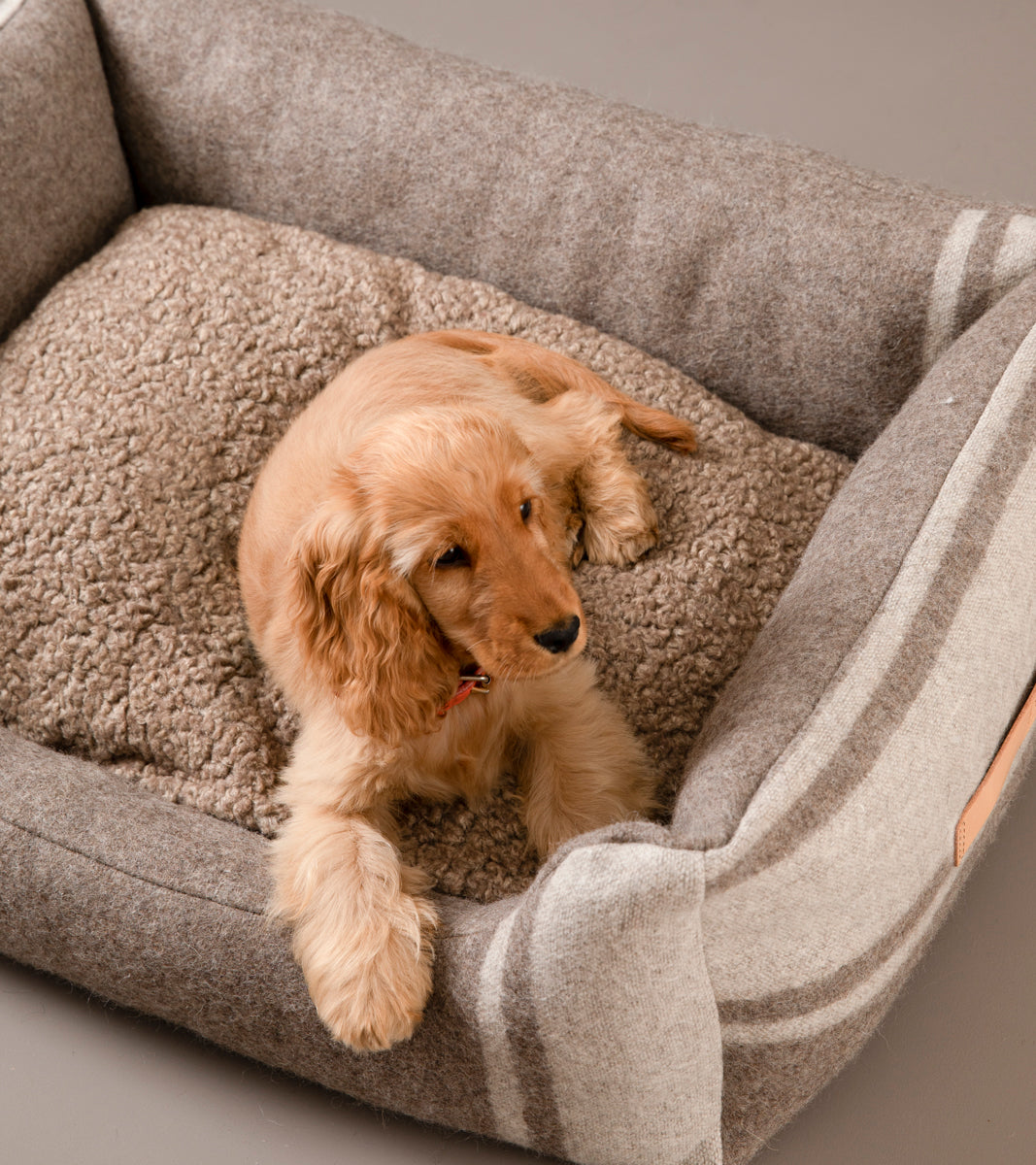
For dogs that sleep curled, the Fulvio round cushion in bouclé sits comfortably in most living rooms — the round form is friendly to corners and works alongside most furniture shapes. For dogs that need more room to stretch out, the Henri bed in jute, bouclé, or Casentino wool gives them a proper surface without taking over the room.
If the dog also uses the sofa — which many do, regardless of the owner's original intentions — an Ansel blanket over the cushions gives them a designated spot on it. This is more effective than a blanket over the whole sofa because it's specific: the dog learns where their space is, and the rest of the sofa stays clean.
One practical note on materials: bouclé wears well with dogs, which surprises most people who assume the loops will snag. In practice, the texture handles light claw contact better than most tightly woven fabrics. Cotton canvas and jute are even more forgiving. The materials to be cautious with are very loosely woven linens and open-knit textures — claws catch in them more readily.
Both the Henri beds and Fulvio cushions have removable, washable covers. The interchangeable covers system means you can also swap materials seasonally or if the room changes — worth knowing about before you assume a bed is a permanent commitment.
The feeding area
The space around a dog's food and water bowls is probably the most neglected design decision in a dog-friendly home. Most people put the bowls on the kitchen floor, move them every time they mop, and leave it at that.
A fixed, intentional feeding area makes daily life a bit simpler and the kitchen floor a bit more coherent. The basics: choose a corner that isn't in the main traffic flow, keep the bowls on a surface that protects the floor and is easy to wipe down.
The David cowhide placemat handles this well — naturally water-resistant, easy to clean, and visually resolved in kitchens with stone, tile, or hardwood floors. It's available in natural cowhide and dark chocolate; the darker version tends to disappear against most floor surfaces in a way that feels deliberate rather than hidden.
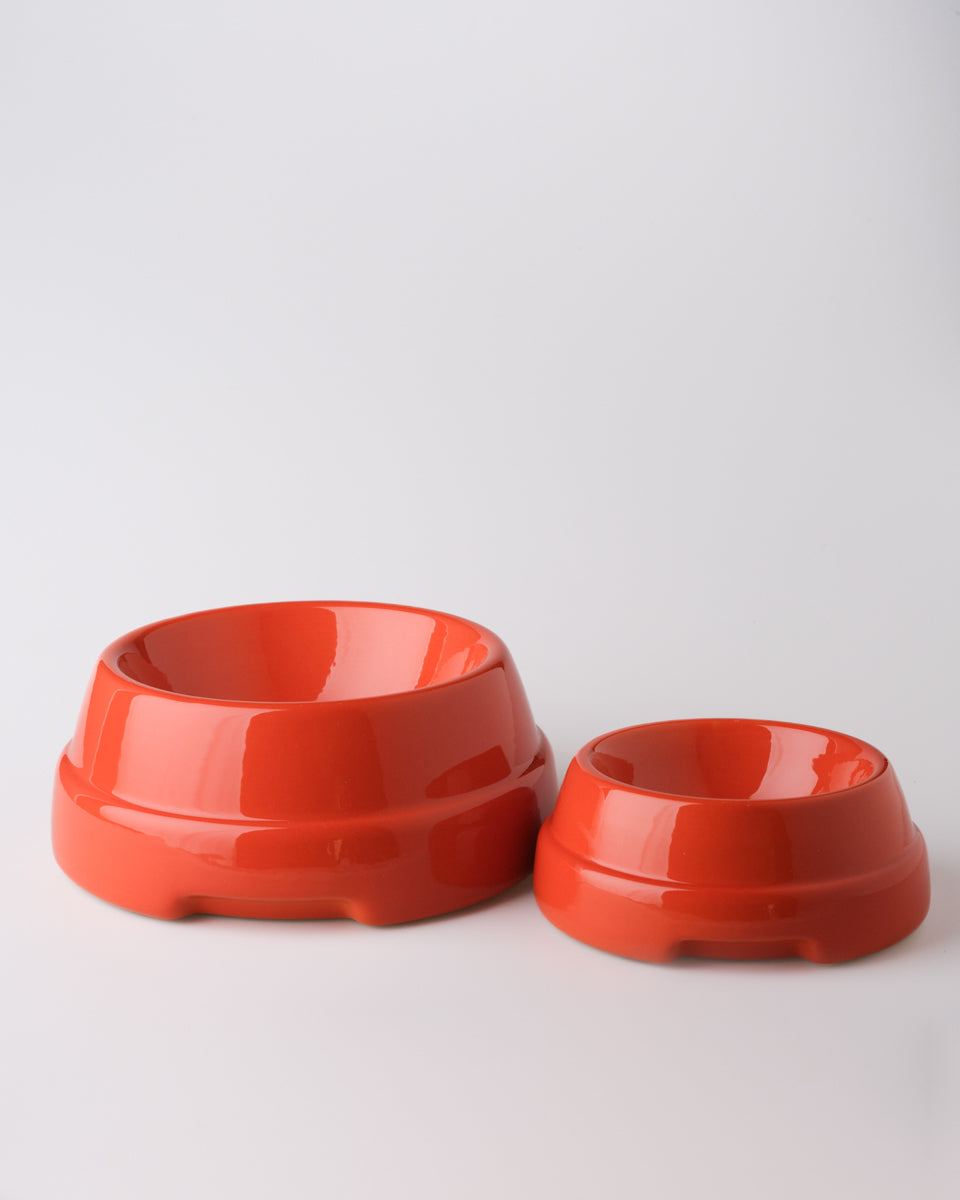
For the bowls themselves, the Sarah ceramic bowl is worth considering. Ceramic is heavier than stainless, which means it stays put during meals. It's also dishwasher safe and doesn't retain the odours that plastic tends to develop over time. Not a dramatic upgrade, but the kind of small decision that makes the whole area feel finished.
Where your dog sleeps
If your dog sleeps in the bedroom — on the floor, or at the foot of the bed — the same placement principles apply as the living room, but the scale is usually different. Bedrooms tend to be smaller, and a large bed can feel intrusive in a way it wouldn't in a living room.
The Richard slim cushion in wool is designed for this context: a lower profile than the Henri or Fulvio, it sits closer to the floor and takes up less visual space in a bedroom setting. For smaller dogs, or dogs that sleep tucked against the bed frame, it's often more appropriate than a cushion designed for a room centrepiece role.
If the dog sleeps on the bed itself, the Ansel blanket works here too — folded at the foot of the bed, it defines a space without turning the whole bed into a dog bed.
A few things about materials
Dog owners often overbuy on washability and underbuy on durability, which leads to replacing things more often than necessary. The most useful question isn't "can I wash this?" but "will this still look good in three years?"
Natural fibres — wool, cotton, jute — age well. They develop character rather than just looking worn. Synthetic materials tend to do the opposite: they hold their shape initially and then degrade in ways that are hard to reverse. A well-made natural fabric that you wash regularly will outlast a synthetic that you wash less often because it doesn't feel worth the effort.
Removable covers are worth prioritising over easy-clean surfaces, because the cleaning happens in a machine rather than on your hands and knees. All 2.8 beds and cushions have this — it's one of the less glamorous but more useful decisions built into the range.
On colour: mid-tones hide more than very light or very dark. A warm grey or natural jute shows less day-to-day wear than cream or charcoal, which both show everything. If you want a light or dark colourway, plan for washing more often or buy a spare cover.
The underlying principle
A home that works well with a dog in it isn't a compromise and it isn't a project. It's just a home where someone thought about the dog when they were making decisions — the same way you'd think about natural light, or where people sit, or where things are stored.
The objects don't need to match. They need to belong. And belonging comes from being chosen with the same care as everything else in the room, not from being specifically marketed as dog-friendly.
Browse the full range at 2.8 Design for Dogs — beds, cushions, blankets, bowls and walking accessories, all made in Italy and designed to live in homes that take both occupants seriously.