
Merino Wool Dog Sweaters for Every Shape
Finding a dog sweater that fits is harder than it should be. Most are cut for an imaginary average dog — a medium build, a medium neck, a medium back. Real dogs are rarely average. A dachshund is mostly back. A toy poodle is mostly legs. A doodle is mostly floof. And so the sweater rides up, bunches at the shoulders, gapes at the chest, or slides off entirely.
A good merino wool dog sweater solves the fit problem and the warmth problem at once. This guide explains why merino is the material worth paying attention to, which breeds struggle most with off-the-rack knitwear, and what to look for so your dog is warm, comfortable and — quietly — very well dressed.
Why merino wool, and not acrylic
Most dog sweaters on the shelf are acrylic. It's cheap, it's bright, and it does one thing: trap a little air. Merino wool does considerably more.
Merino is a natural, active fibre. It regulates temperature rather than simply insulating, so it keeps a dog warm in the cold without overheating them the moment they trot indoors or into the sun. It's breathable, it wicks moisture away from the skin, and it's naturally odour-resistant — a wool sweater stays fresh far longer between washes than a synthetic one. The fibres are fine and soft, so there's none of the scratchiness people remember from old jumpers, which matters for dogs with sensitive skin or short coats.
There's a comfort argument too. Merino gives warmth without bulk. A heavy padded coat restricts how a dog moves; a fine merino knit moves with the body. For everyday wear — the morning walk, the cold kitchen floor, the car — that lightness is the difference between a dog who tolerates a sweater and a dog who forgets they're wearing one.
The breeds that off-the-rack sweaters fail
If your dog has ever worn a sweater that looked wrong, the dog probably wasn't the problem. These are the shapes standard sizing struggles with most.
Dachshunds
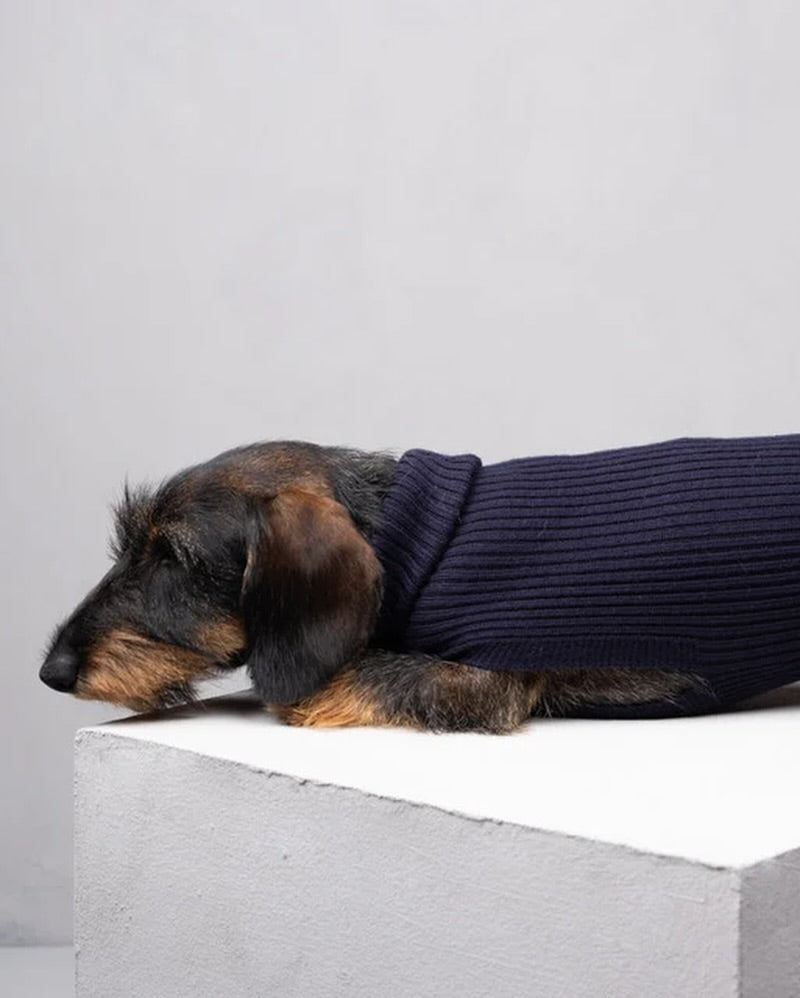
The classic hard-to-dress dog. A dachshund sweater has to cover a long back and a deep chest while leaving short legs free, and most don't — they either fit the chest and leave the lower back bare, or fit the length and swim around the shoulders. Dachshunds also genuinely need the warmth: low to the ground, short-coated, and prone to feeling the cold on their belly and back. A sweater cut to follow a long spine, rather than a generic tube, changes everything for them.
Poodles and toy poodles
Poodles are deceptive. Under all that curl is a fine, athletic frame with a narrow chest and a long neck, so a sweater for a poodle that's sized by weight alone tends to be too wide and too short in the neck. Toy and miniature poodles feel the cold quickly once they're clipped, and a soft merino layer keeps them warm without flattening or matting the coat the way rough synthetics do.
Doodles — goldendoodles, cockapoos, cavapoos
Doodles are all over the map: a cockapoo and a standard goldendoodle share a name and almost nothing else in build. What they share is coat. A doodle sweater in a coarse fabric drags and mats that signature curly coat; fine merino sits smoothly against it. Because doodle sizing varies so much within the "doodle" label, they're the breed group that benefits most from a sweater you can size to the individual dog rather than a rough small/medium/large.
Cocker spaniels, whippets, Italian greyhounds and the rest
Spaniels have deep chests and feathered coats that need a smooth layer underneath. Whippets and Italian greyhounds are the opposite of a dachshund — barely any coat and almost no body fat — so they live in sweaters through winter and need real warmth against the skin. Across all of them the same rule holds: fit follows the individual dog's frame, not a label on a size chart.
What makes Paul different
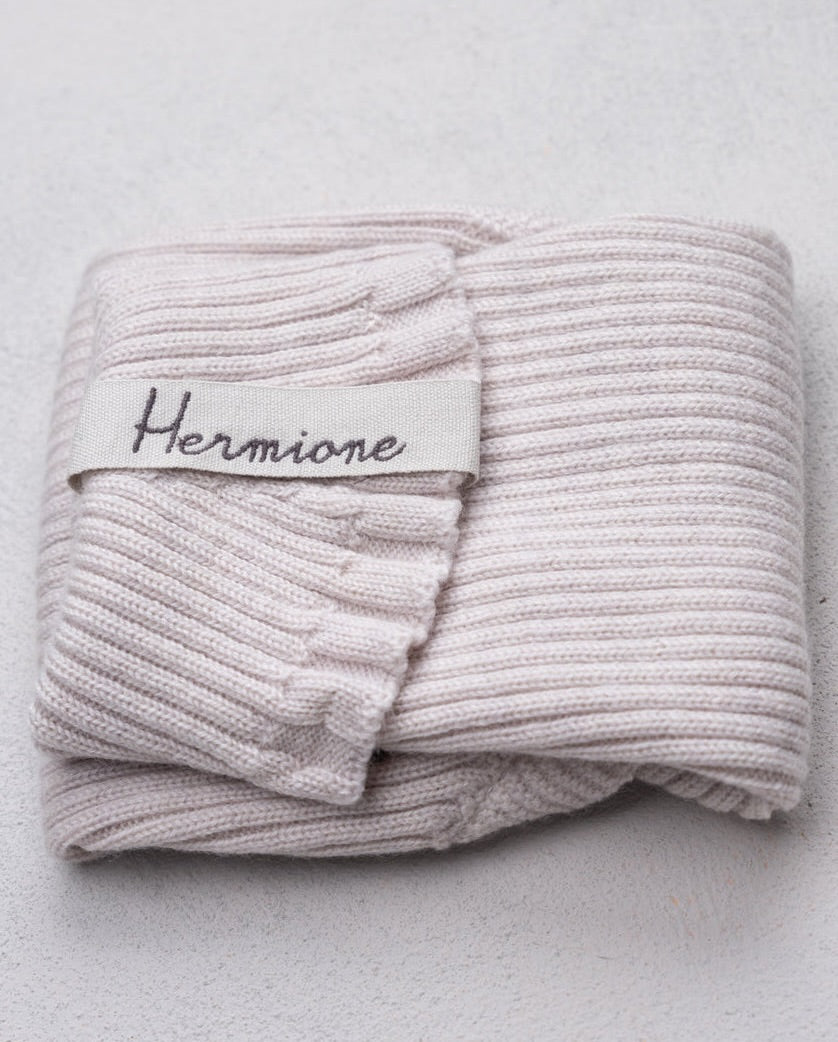
Paul is our answer to every fit story above — a merino wool dog sweater made in Italy, from beginning to end, in the Le Marche region.
It's knitted seamlessly, as a single tubular piece, so there are no seams to rub, no join to bunch at the shoulders, and no restriction across the front legs. The knit is shaped to follow the natural line of the spine, which is exactly what long-bodied and deep-chested dogs need: the sweater hugs the ribcage and stays put instead of twisting or sliding back.
The collar is a turtleneck you can pull up over the ears in real cold, or fold down for a softer look. And because it's fine merino rather than a bulky knit, Paul works as a base layer under a raincoat on wet winter days — warmth underneath, weather protection on top, no bulk in between. It comes in three considered colourways — Eucalyptus, Chalk and Navy — made to go with any coat, collar or lead.
How to choose the right size
Weight is a starting point, not an answer — two dogs at the same weight can be completely different shapes. Measure your dog before you buy:
- Back length: from the base of the neck (where a collar sits) to the base of the tail. This is the most important number, especially for long-bodied breeds.
- Chest girth: the widest part of the ribcage, just behind the front legs.
- Neck girth: around the base of the neck.
On the product page you can use our size configurator to match those measurements to the right fit, which takes the guesswork out — particularly useful for doodles and any dog that sits between two sizes.
Caring for a merino sweater
Merino is more forgiving than people expect. Because the fibre resists odour, it needs washing far less often than synthetic knitwear — airing it between wears is often enough. When it does need a wash, use cool water and a wool-safe detergent, then reshape it flat to dry rather than hanging or tumbling it. Treated gently, a good merino sweater lasts season after season — it's made to.
Does your dog actually need a sweater?
Some do, some don't. Short-coated, small, senior, very lean or low-to-the-ground dogs lose heat quickly and genuinely benefit from a layer in cold weather. Thick double-coated northern breeds usually don't. If your dog shivers, tucks, lifts their paws off cold ground, or is reluctant to go out in winter, that's your answer — and a fine merino layer is the most comfortable way to fix it.
Meet Paul — our merino wool dog sweater, made in Italy. Head to tail, incredible wearability.
FAQ
Are wool sweaters good for dogs? Yes — fine merino wool in particular. It regulates temperature, breathes, resists odour and is soft against sensitive skin, which makes it more comfortable and more practical than acrylic for everyday wear.
What's the best dog sweater for a dachshund? Look for one shaped to follow a long spine with a deep enough chest, rather than a generic tube. A seamless merino knit that hugs the ribcage stays in place on a long body instead of riding up.
Do poodles and doodles need sweaters? Once clipped, poodles and many doodles lose warmth quickly and appreciate a layer in cold weather. Choose a fine, smooth knit like merino that won't drag or mat their curly coat.
Merino wool vs acrylic — is it worth it? Merino costs more because it does more: real temperature regulation, breathability, odour resistance and softness, plus it lasts far longer if cared for. Acrylic only traps a little air.
How do I measure my dog for a sweater? Measure back length (neck to tail base), chest girth (widest point behind the front legs) and neck girth. Match those to the size configurator on the product page rather than guessing by weight.
Can my dog wear it under a raincoat? Yes. Because Paul is a fine merino layer rather than a bulky coat, it works as a warm base layer under a raincoat on wet days.