
How to Help Your Dog Sleep Through the Night: A Calm-Sleep Guide
A good night's sleep matters as much for dogs as it does for us — and a dog who doesn't settle usually means an owner who isn't sleeping either. If your dog is restless at night, wakes often, paces, or won't settle in the first place, the good news is that the cause is usually one of a handful of things, and most of them are fixable at home.
This guide covers why dogs wake at night, what actually helps, how it changes with age, and the point at which restlessness is worth a conversation with your vet.
Why Is My Dog Restless at Night?
Before changing anything, it helps to know what you are solving for. Night-time restlessness usually comes down to one of these:
Too much energy left over. A dog who hasn't had enough physical and mental exercise during the day will have energy to burn at night. This is the most common cause in young, healthy dogs, and the easiest to fix.
An uncomfortable or poorly placed bed. Too hard, too cold, in a draught, in a busy hallway, or simply too small to stretch out in — any of these will keep a dog shifting and resettling through the night.
A disrupted routine. Dogs are creatures of habit. A late dinner, a changed bedtime, a new environment, or a house that stays active late will all unsettle sleep.
Anxiety or over-stimulation. Noise, a recent change at home, separation worry, or an over-exciting evening can leave a dog unable to wind down.
Age. Puppies and senior dogs both sleep differently from healthy adults — more on that below.
Something physical. Less often, night waking signals discomfort, pain, needing to toilet more frequently, or another health issue. If the restlessness is new, sudden, or paired with other changes, treat it as a reason to check with your vet rather than a training problem.
What Can I Give My Dog to Help It Sleep?
This is one of the most common questions owners ask, so let's answer it directly and honestly: the first answer is not something you give, but something you change. The large majority of night-waking is resolved by exercise, routine, and the sleeping environment — the things covered in this guide — not by any supplement or remedy.
If you have addressed all of that and your dog still cannot settle, that is the point to speak to your vet — before giving your dog anything. Some owners reach for over-the-counter supplements or human sleep remedies; several of the latter are genuinely dangerous to dogs, and even the calming products marketed for dogs vary widely in what they contain. Your vet can tell you whether anything is appropriate for your specific dog, rule out an underlying cause, and advise on dosing. It is not a step to improvise at home.
In other words: fix the routine and the environment first, and if that isn't enough, the next call is to your vet, not to a shop.
Build a Consistent Bedtime Routine
Dogs thrive on predictability, and a settled evening routine is the single most effective thing most owners can do.
Aim for the same rough sequence each night: a walk, dinner a couple of hours before bed, a calm wind-down period, then sleep. The wind-down matters — a dog taken straight from an exciting game to their bed will still be buzzing. Let the evening quieten down for half an hour or so before you expect them to settle.
A good walk earlier in the evening helps a dog spend the energy that would otherwise surface at bedtime. For dogs who are mentally as well as physically restless, a little problem-solving during the day — a puzzle feeder, some training, a proper sniff-heavy walk — tires them in a way that a lap of the block does not.
Get the Sleeping Environment Right
Once the routine is in place, where and how your dog sleeps is the next lever — and the one where the right bed genuinely earns its place.
A dog sleeps better in a spot that is quiet, dimly lit, free from draughts, and consistently theirs. A bed that moves around the house, or sits in a thoroughfare, never becomes the reliable signal that it's time to rest. Give the bed a settled home and leave it there.
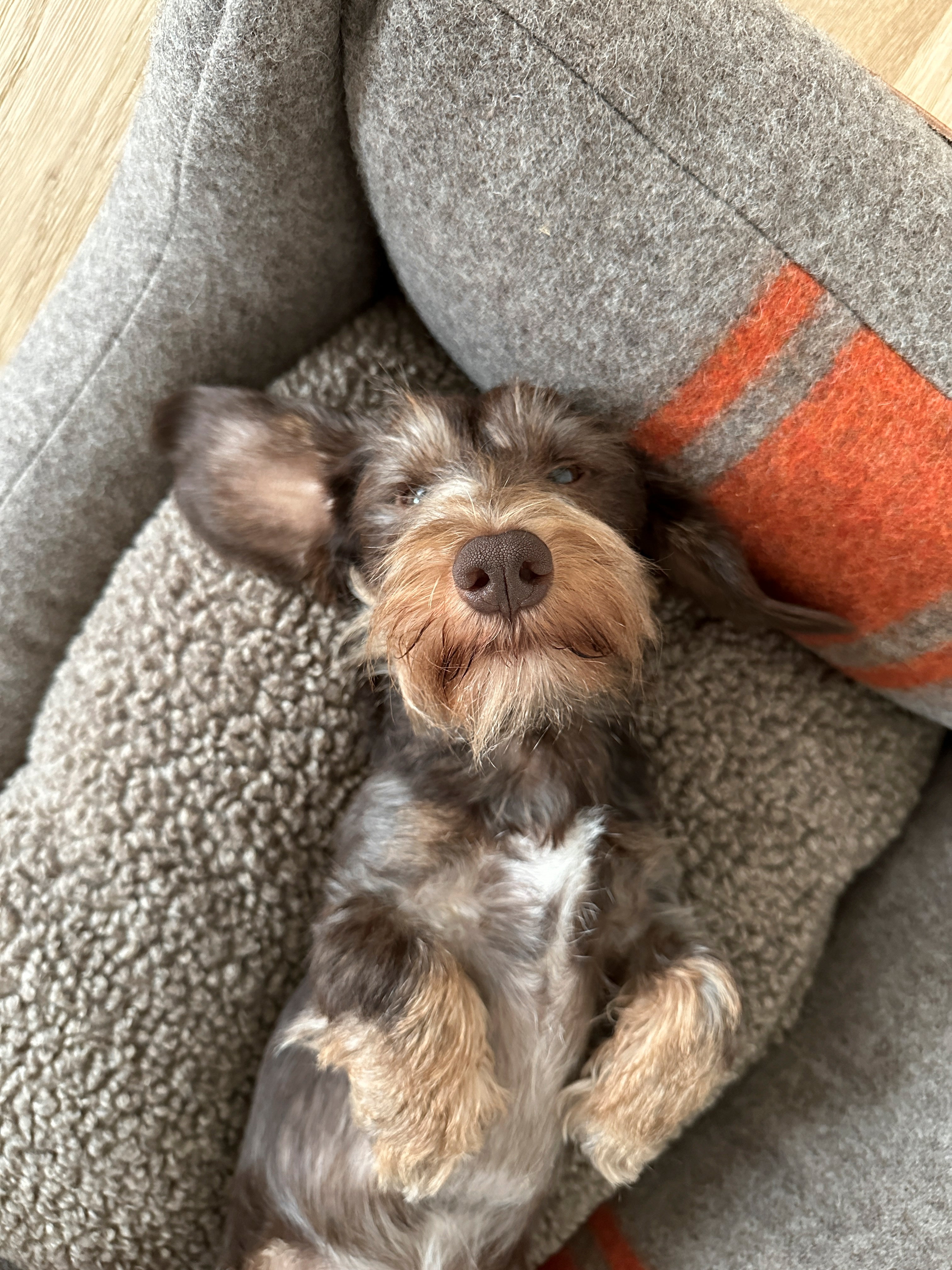
The bed itself matters more than it seems. It needs to be big enough to stretch out fully, supportive enough to be comfortable on the joints — particularly for older dogs — and made of something that holds warmth without overheating. This is where natural materials do real work: our Henri recycled wool bed uses wool precisely because it insulates and regulates temperature, keeping a dog warm on a cold night without leaving them too hot. For dogs who like to nest and burrow, a softer, higher-sided option like the Henri bouclé wool bed gives them something to curl into.
Some dogs settle better with an extra layer to arrange themselves around. A light, breathable throw such as the Yuki bamboo blanket adds warmth for a dog who likes to nest, without the weight of a heavy blanket. And a familiar object — a favourite toy, something that smells of home — reassures a dog who is slow to settle.
Mind the Evening Meal and Water
Feeding plays a quiet role in night-time rest. A heavy meal right before bed sits uncomfortably and can mean a broken night or an urgent early start; a smaller, balanced dinner a couple of hours before bed gives time to digest and settle.
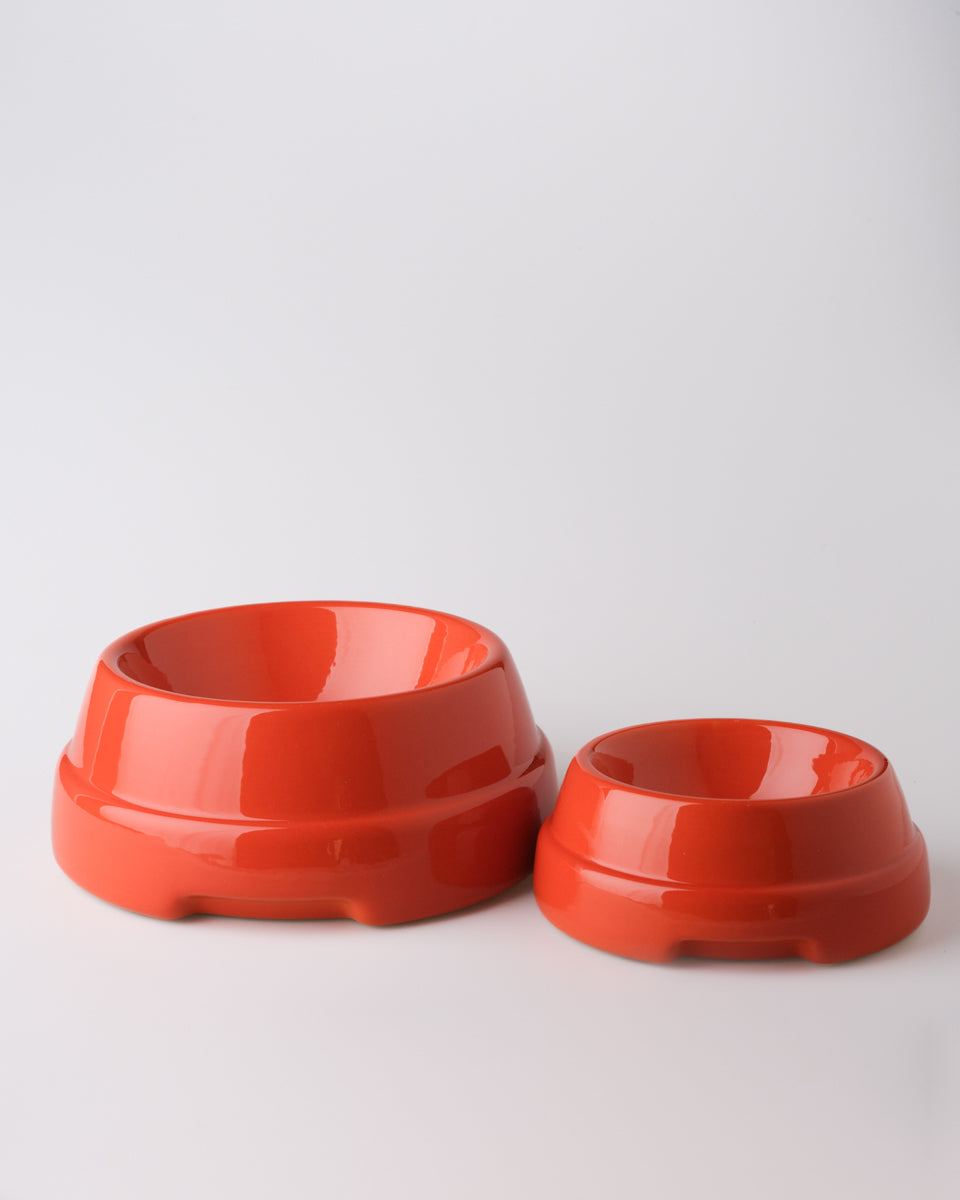
Fresh water should be available through the night, in a stable, clean bowl that won't tip. That said, for a dog who wakes needing to toilet, timing the last big drink a little earlier in the evening — while keeping water accessible — can help them last the night.
How Sleep Changes With Age
Puppies sleep a great deal — often 18 to 20 hours a day — but rarely through the night at first, much like a human baby. Consistency, a settled sleeping spot, and patience matter more than any single fix; most grow into steadier nights as they mature.
Adult dogs typically sleep 12 to 14 hours across a day, most of it at night if their days are active enough. A healthy adult who suddenly starts waking is worth paying attention to — it usually points to a change in routine, environment, or health rather than a whim.
Senior dogs often see their sleep fragment. Stiffer joints make comfort harder, and some older dogs become restless or disoriented at night. A supportive, warm, easy-to-enter bed helps a great deal here — and because disrupted sleep in an older dog can signal pain or age-related changes, it is worth mentioning to your vet rather than assuming it's simply age.
When to Talk to Your Vet
Most night-waking is behavioural or environmental and resolves with the changes above. But treat restlessness as a medical question rather than a training one when it is sudden or new, paired with other changes (drinking more, toileting more, appetite changes, pacing, disorientation, signs of pain), or when it persists despite a good routine and a comfortable bed. In those cases the sleep problem is a symptom, and your vet is the right first call.
In Short
Helping a dog sleep through the night is rarely about one trick. It's about spending their energy during the day, keeping the evening predictable, and giving them a warm, quiet, comfortable place that is reliably theirs. Get those right and most dogs settle. When they don't, that's the signal to check with your vet rather than to improvise.
For the sleeping side of it, our full range of dog beds, cushions and blankets is designed around exactly this — natural materials, proper support, and the kind of comfort that makes a bed somewhere a dog actually wants to be. If you'd like help choosing the right size or material for your dog, write to us.
Explore the Sleeping collection — dog beds, cushions, day beds and blankets, handmade in Italy from natural materials.